
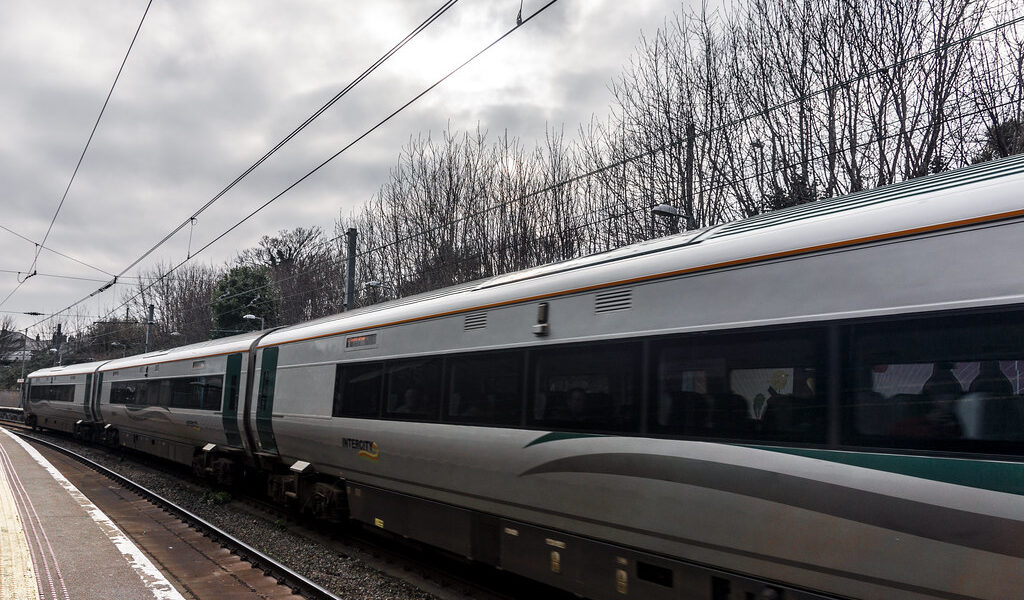
Every meter of railway track in the world — from the Trans-Siberian Railway to the London Underground — relies on a component that most passengers never see, most infrastructure managers underestimate, and most maintenance engineers have to fight budget committees to replace before it causes a major problem. That component is the rubber rail pad: a thin elastomeric pad, typically 6–12 mm thick, placed between the steel rail and the concrete or steel sleeper beneath it.
The pad is invisible from the platform. The pad is invisible to the operator in the cab. But when a section of track loses its pads to wear or brittleness, the consequences become visible very quickly: accelerating rail corrugation, cracking sleepers, increasing noise in tunnels and residential areas, and eventually, track geometry degradation that forces speed restrictions.
This guide covers everything the infrastructure engineer, track maintenance manager, and procurement specialist needs to know about rubber rail pads — their physical function, stiffness specifications, type selection, applicable standards, fastening system compatibility, and sourcing strategy.
Contact Babacan Group for rail pad specifications, samples, and pricing.
What a Rubber Rail Pad Actually Does
To understand why rail pads matter, it helps to think about what happens in their absence. A steel rail sitting directly on a concrete sleeper creates a metal-on-concrete contact interface. Under a passing axle load of 20–30 tonnes, this interface behaves like a hammer striking a hard floor. The impact is instantaneous, high-magnitude, and repeated at a rate determined by train speed and wheel spacing.
At 120 km/h with a standard bogie axle spacing, a fixed point on the rail is loaded and unloaded approximately 4–6 times per second for each passing train. In a high-density urban metro corridor with 90-second headways during peak hours, that point may be loaded 40,000 to 60,000 times per day.
Without a pad, the concrete sleeper surface at the rail seat cracks within months under this loading regime. The rail base digs into the concrete, creating an uneven bearing surface that further concentrates stress. The rail itself develops rail seat abrasion — a pattern of wear on the rail base that is both a maintenance problem in itself and an indicator of missing or degraded pad function.
With a correctly specified pad, the elastomeric material deforms slightly under each axle load, distributing the contact stress over a larger area of the sleeper surface and attenuating the high-frequency impact components before they reach the concrete. The pad does not eliminate the load — nothing does — but it changes the load-time profile from a sharp spike to a broader, lower-peak waveform that the concrete and fastenings can tolerate indefinitely.
This is vibration isolation at its most economically consequential scale. A pad that costs €2–8 per unit protects a concrete sleeper that costs €30–60 to manufacture, install, and maintain. The leverage ratio is dramatic.
The Four Main Types of Rail Pads
Grooved Rubber Pads
Grooved pads are the most widely used pad type in ballasted track applications worldwide. The surface geometry — parallel grooves running perpendicular to the rail axis — provides compliance under vertical load while the grooves allow lateral deflection under the rail’s tendency to spread under wheel load. The groove geometry is not decorative; it directly determines the pad’s static stiffness and its fatigue behavior under repeated loading.
Standard grooved pads are typically natural rubber compound, Shore 55–75A hardness, with a thickness of 6–10 mm. The groove depth, groove width, and groove pitch are specified by the pad manufacturer or the track authority and are part of the type-approval documentation submitted under EN 13481-2 testing.
Grooved pads are suitable for conventional ballasted track with timber or concrete sleepers, for speeds up to 250 km/h depending on the stiffness specification, and for axle loads up to 30 tonnes (heavy haul specifications require separate assessment).
Studded Pads
Studded pads use a pattern of discrete rubber studs on the bearing surface rather than continuous grooves. This geometry is common in ballastless (slab track) applications — metro systems, high-speed rail in tunnels, and bridge deck track — where the concrete base is monolithic and the pad must provide the only elastic element in the load path.
In a ballasted track system, the ballast itself provides some vibration attenuation. In slab track, there is no ballast — the track sits on a continuous concrete invert or deck. The pad must therefore carry the full isolation requirement that in ballasted track is shared between pad and ballast. Studded pads are typically softer (lower static stiffness) than grooved pads for this reason, and they are used in thicker sections (10–14 mm) to provide adequate deflection under load.
The stud geometry determines the progressive stiffness behavior under load: as the stud compresses, its contact area with the opposing surface increases, and stiffness increases nonlinearly. This progressive response is a design feature — it limits maximum deflection under high axle loads while remaining compliant under the lighter wheel loads produced by passenger rolling stock.
EVA and Composite Pads
Ethylene-vinyl acetate (EVA) pads are used in high-speed rail applications, particularly in European high-speed networks. EVA provides excellent fatigue resistance at high loading frequencies and maintains consistent stiffness properties over a wide temperature range. EVA pads are typically used in the 100–300 MN/m stiffness range for high-speed applications where pad deflection under load must be tightly controlled for track geometry stability.
Composite pads combine a rubber body with fiber reinforcement or with a thermoplastic outer shell that limits compression set under sustained load. They are used in applications where the pad must maintain its original geometry over very long service life — typically 15–25 years in major infrastructure projects.
Boot Pads for Booted Rail Systems
Urban rail systems in tunnels and in areas of close residential proximity often use a booted rail system — the entire rail base is enclosed in a rubber boot that provides vibration and noise isolation across all surfaces. The boot pad is not simply a flat pad but a three-dimensional molded rubber element that wraps around the rail foot and clips into the sleeper housing.
Booted rail systems reduce ground-borne vibration in tunnels by 10–20 dB compared to standard pad systems. This makes a measurable difference to buildings and residents directly above metro tunnel alignments. Booted systems are standard in new metro construction in major European cities and are being retrofitted in existing tunnel sections where vibration complaints have reached regulatory thresholds.
Stiffness Specification: The Number That Defines Every Rail Pad
Rail pads are not specified by material alone. The defining engineering parameter is static stiffness, measured in MN/m (meganewtons per metre). This number determines how much the pad deflects under a given load, and therefore how much vibration and dynamic load amplification is transferred from the rail to the sleeper and structure below.
The stiffness spectrum for rail pads spans approximately two orders of magnitude:
Soft pads (100–200 MN/m): Used in slab track metro systems, in tunnels where ground-borne noise is regulated, at bridge deck crossings, and at stations where passenger waiting areas are directly adjacent to the running rail. Soft pads provide maximum vibration attenuation but deflect more under load, creating higher dynamic wheel/rail forces if the track geometry is not maintained carefully.
Medium pads (200–500 MN/m): The most common specification for conventional ballasted track on national rail networks. This range balances isolation performance against the track maintenance requirements — softer pads require more frequent tamping to correct geometry.
Stiff pads (500–1,200 MN/m): Heavy haul freight railways, where 25–30 tonne axle loads are standard, use high-stiffness pads to limit rail deflection under load and protect fastening system components from overload. Stiff pads provide minimal vibration attenuation but maximize load distribution across the sleeper seat area.
The same railway line may use different stiffness specifications at different locations. A national rail operator might specify 300 MN/m pads in open track, 200 MN/m at stations, 150 MN/m on bridge deck sections, and 500 MN/m on sharp curves in freight-heavy corridors. Track engineers make these decisions based on ground conditions, load projections, noise sensitivity, and maintenance access.
The Shore hardness of the pad rubber is related to stiffness but is not a substitute specification — two pads of the same hardness but different geometry will have different stiffness values. Stiffness must be measured by test, not inferred from hardness alone.
Applicable Standards: EN 13481-2 and DIN 45673
The European standard EN 13481-2 covers requirements and test methods for rail fastening systems in ballasted track. It specifies the test protocol for measuring static stiffness, fatigue performance (the pad must survive 3 million load cycles in the test protocol without dimensional change exceeding specified limits), and resistance to environmental conditions including temperature cycling, UV exposure, and chemical immersion.
Type approval under EN 13481-2 is mandatory for rail pads supplied to European national rail operators and most European metro systems. A pad without valid EN 13481-2 type test documentation cannot be legally specified into new European railway infrastructure.
DIN 45673 is the German standard for dynamic stiffness testing of under-sleeper pads and rail pads. It differs from EN 13481-2 primarily in how dynamic stiffness is measured — DIN 45673 uses a frequency sweep test that captures how pad stiffness changes with load frequency, which is relevant to high-speed applications where the dominant loading frequency is above 20 Hz.
Some track authorities specify pads under both standards — EN 13481-2 for type approval and DIN 45673 for the dynamic stiffness characterization that informs track model predictions. Babacan Group manufactures elastomeric rail pads and boot pads with EN 13481-2 type test documentation available on request.
Fastening System Compatibility: Why Pads Are System-Specific
Patrick Fouquet manages track maintenance for a regional railway authority in France. In 2023, he attempted to source alternative rail pads for a section of track fitted with a Vossloh W21 fastening system. The alternative supplier provided pads with the correct dimensions and stiffness specification — but the pads were designed for a Pandrol e-clip system. The shoulder profile on the underside of the pad was slightly different. The pads seated incorrectly under the W21 clips, creating a gap at one edge of the rail foot. Within four months, the rail foot was showing fretting wear on the edge that had been improperly supported.
Fastening systems from the three major European suppliers — Vossloh, Pandrol, and Schwihag — each have proprietary rail seat geometry. The pad must match the fastening system because the pad sits within the rail seat housing, is retained by the elastic clip or screw spike, and must conform to the rail foot and sleeper seat geometry simultaneously.
Vossloh systems (W14, W21, W30) use different rail seat depths, clip force levels, and pad positioning features. A W14 pad is not compatible with a W21 fastening even if the outer dimensions appear similar. Pandrol’s e-clip system uses a specific pad shoulder profile that locates the pad laterally. Schwihag systems use yet another positioning geometry.
When ordering replacement pads, always specify the fastening system manufacturer, system designation (e.g., Vossloh W21, Pandrol e-clip, Schwihag SKL-1), and the rail profile (UIC 54, UIC 60, S49, etc.). Pads are manufactured to match the specific geometry of each fastening system.
Urban Rail: Boot Pads, Metro Systems, and Near-Surface Tunnel Running
Emre Karadeniz is a track systems engineer for a metro operator in Istanbul, overseeing a network section that runs in cut-and-cover tunnel beneath a dense residential and commercial district. Ground-borne vibration complaints from building owners above the tunnel alignment became a regulatory issue in 2021. The track authority’s vibration consultant identified the track fastening system as the primary intervention point — the existing grooved pads at Shore 65A with 350 MN/m stiffness were the correct specification for ballasted track but inadequate for the noise and vibration requirements in the tunnel environment.
The recommended solution was a transition to a booted rail system with an effective pad stiffness below 150 MN/m in the critical section. Implementation at platform areas and beneath the closest residential buildings reduced ground-borne vibration by approximately 14 dB — enough to bring measured levels below the regulatory trigger threshold. The rail pads themselves — individually unremarkable components costing a few euros each — resolved a multi-year regulatory dispute.
Whole-body vibration standards under EU Directive 2002/44/EC set limits for occupational vibration exposure, but ground-borne vibration from railway infrastructure is governed by separate national and municipal standards that define maximum vibration velocity levels in buildings adjacent to railway infrastructure. In practice, these standards drive the stiffness specification for metro and urban rail pad applications in sensitive areas far more directly than any infrastructure efficiency consideration.
Replacement Cycles and Track Maintenance Integration
Rail pad replacement does not happen in isolation. In ballasted track, pads are replaced during major track maintenance cycles — specifically during track tamping operations where the ballast is consolidated and track geometry is corrected. Major tamping cycles on high-traffic lines occur every 5–10 years depending on traffic density.
In high-traffic metro systems, platform areas experience the highest loading rates — a platform rail seat is loaded by every stopping train plus every through service at reduced speed. At platform areas of busy metro stations in major cities, pad replacement intervals of 5–7 years are typical for studded pad systems. Boot pad systems typically achieve 10–15 years in the same environment.
The replacement decision is driven not only by pad condition but by the condition of the sleeper rail seats. If a worn pad has allowed fretting wear to develop at the sleeper rail seat, pad replacement alone may be insufficient — the sleeper seat may require repair or the sleeper may need replacement. This is why early-stage pad replacement, before the pad loses its geometry, is significantly more economical than late-stage replacement that includes sleeper remediation.
For railway operators building maintenance planning frameworks, Babacan Group can supply pad samples for test section installation and performance monitoring. The company has supplied elastomeric rail components to railway projects in 84+ countries and maintains production capability for custom pad geometries matched to specific fastening system requirements.
Request rail pad specifications and pricing from Babacan Group.
Sourcing Rail Pads: Why the Track Owner Sets the Specification
Unlike most industrial rubber parts where the end user selects the specification, rail pad sourcing follows a different authority structure. In railway infrastructure, the specification is set by the track owner — the national railway authority, metro operator, or infrastructure manager — and all pads must comply with that specification as a condition of track access certification.
This means that a contractor installing track on behalf of a railway authority cannot simply select the most cost-effective pad available. The pad must match the approved specification exactly: stiffness class, dimensional tolerances, compound type, and fastening system compatibility, all verified by type test documentation.
For railway operators and infrastructure managers evaluating Babacan Group as a supplier, the company holds ISO 9001:2015 quality management certification and can provide EN 13481-2 type test data for elastomeric pad products. Technical consultation for matching pad specifications to existing fastening systems is available through the Babacan Group technical team.
For related rubber components in railway applications, the chevron springs and railway bogie suspension guide covers the elastomeric components within the bogie suspension system, and the EN 45545-2 railway rubber fire compliance guide covers fire performance requirements for rubber components used in passenger rolling stock — a separate but related compliance area for railway procurement teams.
Key Takeaways
- Rail pads are specified by static stiffness in MN/m, not by material or hardness alone — soft pads (100–200 MN/m) isolate noise and vibration, stiff pads (500–1,200 MN/m) distribute heavy freight axle loads, and the same line may use different stiffness at different locations.
- Fastening system compatibility is non-negotiable — Vossloh, Pandrol, and Schwihag systems each require pads with matching shoulder profiles and seat geometry that are not interchangeable between systems.
- EN 13481-2 type test certification is required for pads used in European railway infrastructure; DIN 45673 characterizes dynamic stiffness behavior relevant to high-speed applications.
- Urban and metro rail in tunnels and near residential areas typically requires booted rail systems or soft slab track pads at stiffness below 150 MN/m to meet ground-borne vibration limits.
- The specification authority for rail pads sits with the track owner, not the installer — all sourcing must match the approved fastening system specification and carry valid type test documentation.
Word Count: ~2,450 words