
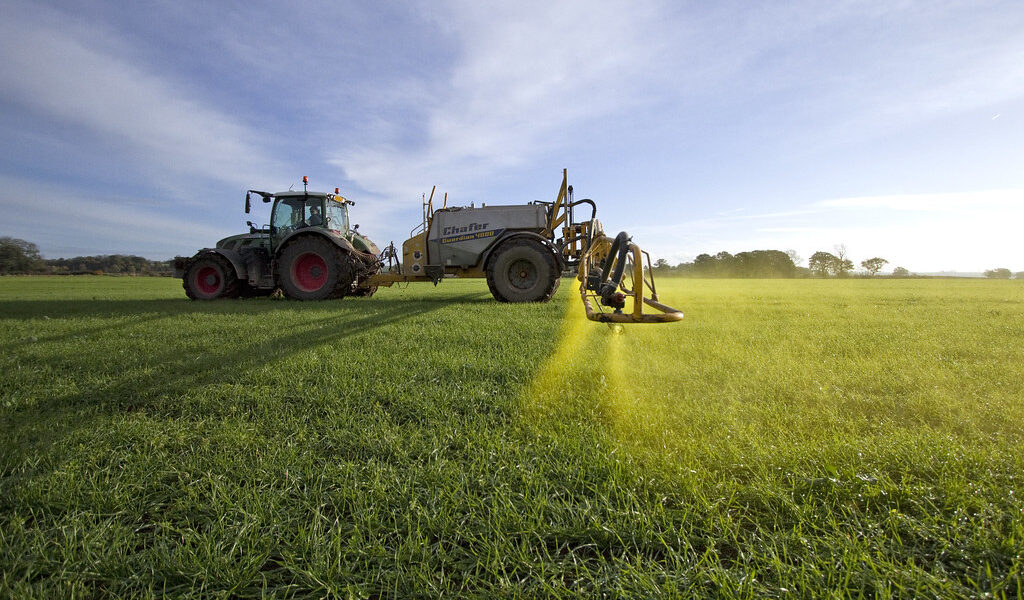
The agronomist managing a 5,000-hectare grain operation in Bavaria knew exactly what he expected from the three Fendt 1050 Vario tractors running the spring deep tillage campaign: minimal operator fatigue across 16-hour shifts, and GPS tramline accuracy within ±2 cm. By the third week of the campaign, one tractor’s tramline accuracy had degraded to ±8 cm. The machine showed no faults. The issue wasn’t the GPS system — it was the front axle TLS suspension pivot bushing. At 4,200 hours with no prior inspection, the bushing had worn enough to introduce 4 mm of axial play in the steering axis. The resulting micro-steering oscillation accumulated to a visible guidance error. Replacement: €195 in parts plus 4 hours of labor. The consequence of not catching it: hectares of wasted overlapping inputs.
Fendt has built a reputation for premium engineering and operator comfort — the Vario CVT (Continuously Variable Transmission) and the Fendt One cab system represent some of the most sophisticated agricultural engineering available. But even the most advanced tractors depend on rubber components to isolate engines, protect drivetrains, and maintain the geometric precision that enables modern precision agriculture.
This guide covers the rubber parts for the Fendt Vario tractor series (700, 800, 900, 1000 Vario), AGCO’s high-horsepower Challenger series, and the Fendt Ideal combine harvester, which uses a similar platform to the high-hp Vario tractors.
Need AGCO or Fendt-compatible rubber parts? Request a quote from Babacan Group — we stock agricultural rubber components for all major brands.
Engine Mounts: AGCO’s FPT and AGCO Power Engines
Fendt tractors use AGCO Power engines (manufactured in Finland) in smaller models and FPT Industrial in larger hp models. The rubber mounting systems differ by engine family.
Fendt 700 and 800 Vario Engine Mounts
The 700 Vario series (165-250 kW) uses AGCO Power’s 6-cylinder turbocharged engines. The four-point engine mounting system:
- Front mounts: Bonded NR-metal sandwich, Shore A 45-50, operating temperature -40°C to +110°C
- Rear mounts: Higher-rated NR/SBR compound for the additional loads from the CVT transmission
- Service life: 5,000-7,000 hours in typical arable farming; shorter in heavy haulage use
The 700 Vario uses Fendt’s VarioDrive — a CVT with four-wheel drive capability — which places higher requirements on rear engine mounts than a simple 2WD transmission. The torque reaction from VarioDrive engagement cycles creates higher peak mount loading than equivalent non-CVT transmissions.
Fendt 900 and 1000 Vario Engine Mounts
The flagship 900 Vario (up to 390 hp) and 1000 Vario (up to 517 hp) use FPT Industrial cursor engines producing the highest outputs in the row-crop tractor segment. Engine mounting requirements:
- Eight-point mounting on the 1000 Vario: Six primary mounts plus two secondary support points
- Compound: Heat-stabilized NR/SBR blend for continuous high-output operation
- Hydromounts at front positions on the highest-power variants: Hydraulic damping integrated into the rubber element
An important Fendt-specific note: The 1000 Vario’s emissions aftertreatment system (SCR + DPF) is mounted directly on the engine, adding 120-180 kg to the engine assembly weight compared to tractors with separate exhaust treatment systems. This affects engine mount loading and should be factored into replacement specification.
Vario CVT Transmission: Rubber Components for Precision Drive
Fendt’s Vario transmission is the defining element of the brand. From the mechanical rubber components’ perspective, the Vario introduces unique considerations:
Vario Transmission Coupling Rubber Elements
Between the engine and the Vario CVT unit, a flexible coupling absorbs torsional irregularity and allows slight misalignment. The Vario CVT is directly sensitive to driveline torsional irregularity — resonances in the coupling can trigger error codes in the transmission management system. Consequently:
- Fendt CVT coupling rubber elements have tighter torsional stiffness specifications than typical agricultural couplings
- A worn or incorrect coupling element can cause transmission control issues that appear electronic in origin but are mechanical
- Replacement interval: 3,000-5,000 hours; do not exceed without inspection
Vario Oil Cooler and Hydraulic System Seals
The Vario transmission runs a separate oil circuit with a dedicated cooler. The rubber seals in this circuit include:
– O-rings for the cooler fittings (NBR standard; FKM if Fendt-spec synthetic CVT fluid is used)
– Transmission case shaft seals
– Hydraulic coupling circuit seals
Fendt specifies AGCO branded transmission fluids for the Vario. Using alternative fluids without verifying seal compatibility can cause NBR seal swelling and transmission oil circuit contamination.
Fendt One Cab System: Isolation Engineering for Precision Farming
The Fendt One cab concept — introduced with the 900 Vario generation — represents the state of the art in agricultural cab isolation. The cab is mounted on an isolated sub-frame with active damping elements, targeting whole-body vibration below the EU Vibration Directive action value of 0.5 m/s² A(8) in typical operating conditions.
Cab Isolation Mount System
The Fendt One cab uses six isolation mounts arranged in a specific geometry around the cab sub-frame:
- Front two mounts: Compression-loaded, carry the majority of the cab weight
- Rear four mounts: Shear-loaded, primarily resist cab pitching and rolling motions
- Mount compound: Silicone-modified NR compound for extended thermal stability; the cab heating and cooling system’s efficiency depends in part on the cab being properly isolated from the hot engine
Fendt One cab mount replacement requires specific tooling (the cab is lifted slightly to access rear mounts) and is typically a workshop rather than field task. Some Fendt dealers report that cab mounts are often overlooked because the cab itself feels acceptable to the operator until mounts are severely degraded — the Fendt One’s active isolation system masks the early stages of mount deterioration.
Fendt One Cab Noise Isolation Rubber
The Fendt One cab uses acoustic isolation rubber at all penetration points (control cables, hydraulic hose entries, electrical conduit entries) to maintain the cab’s NVH (Noise, Vibration, Harshness) performance. These grommet seals and penetration isolators:
- Prevent acoustic short-circuits that would negate the cab’s structural isolation
- Must maintain their sealing function through repeated cycles of cab pressurization (Fendt One maintains slight positive cab pressure to exclude dust)
- Require alkaline-resistant compound for contact with cleaning chemicals used in cab washing
For research on how whole-body vibration affects agricultural operators and the regulatory framework, the EU Vibration Directive 2002/44/EC provides the governing standards.
Front Axle Suspension Rubber: TLS and Fendt’s Active Approach
Fendt 700, 900, and 1000 Vario tractors use a Triple Link Suspension (TLS) front axle — the same design that New Holland uses in the T7/T8 series. However, Fendt’s implementation includes active hydraulic control that extends the suspension travel and stiffness range beyond the passive TLS design.
TLS Pivot Bushing Specifications for Fendt
The main TLS pivot bushing on Fendt 900 Vario:
– Outer diameter: 90-110 mm
– Compound: NR, Shore A 65-75 (stiffer than equivalent New Holland T7 application due to Fendt’s wider active suspension range)
– Tolerance on lateral play: Maximum 2.0 mm (tighter than New Holland’s 2.5 mm due to Fendt’s precision guidance requirements)
The 4 mm wear detected in the Bavarian case above represents twice the maximum tolerance. At this level of bushing wear, the precision farming system compensation algorithm was working at its limit and occasionally failing to maintain trajectory.
Active TLS Hydraulic Accumulator Rubber
Fendt’s active TLS uses hydraulic accumulators that maintain variable spring rate. The accumulators use rubber diaphragms or bladders:
– Must maintain pressure isolation over 5,000+ hour service life
– Temperature range: -40°C to +80°C (accumulator temperature cycles with hydraulic fluid temperature)
– Replacement at 6,000-8,000 hours is typically specified
AGCO Challenger Series: High-HP Rubber Requirements
The Challenger MT700 and MT900 series tracks tractors (rubber tracks, not steel) represent AGCO’s high-HP farming platform. Rubber components here include:
Rubber Track Components for Challenger MT Series
The Challenger’s defining feature is its rubber belt tracks. The rubber tracks:
– Are complete rubber belts with embedded steel rebar reinforcement
– Drive through steel sprockets that engage drive lugs molded into the inner surface
– Must maintain flexibility at -30°C for Canadian winter/spring field operations
Rubber track replacement is a major service event ($8,000-$15,000 per track) but is the highest-impact rubber service item on a Challenger. Track life depends heavily on:
- Speed during field work: Belt fatigue is highly speed-sensitive; exceeding recommended field travel speed cuts track life significantly
- Road travel: Hard road surfaces are much more abrasive than field soil
- Drive sprocket condition: Worn sprockets accelerate track inner lug wear
Undercarriage Rubber Rollers
The Challenger uses a number of rollers under the track belt to support the machine weight and guide the belt. These rollers have rubber-coated surfaces:
- Shore A 55-65 for good wear resistance and belt support
- All-terrain operating requirement: Must maintain contact across soft soil, hard ground, and stubble
Fendt Ideal Combine Harvester: Shared Platform Rubber
The Fendt Ideal 7, 9, and 10 series combines share the AGCO engineering platform and use similar rubber component architecture to Fendt’s high-hp Vario tractors in the engine and cab systems.
Specific Fendt Ideal rubber parts of note:
– Rotor isolation mounts: The Ideal’s RollBelt separation system uses rubber-isolated rollers
– Grain tank unloading system rubber seals: FKM seals specified for the high-speed grain flow environment
For general combine harvester rubber part guidance including threshing, cleaning shoe, and feeder house rubber systems, see our combine harvester rubber parts guide.
Sourcing Considerations for AGCO/Fendt
Fendt maintains tight dealer control over their Vario transmission service — CVT-specific components (coupling elements, seal kits) are typically supported through the AGCO/Fendt dealer network. For general rubber components (engine mounts, cab mounts, TLS bushings), OEM-compatible aftermarket parts manufactured to specification are increasingly used by large fleet operators and service companies.
For the framework on OEM versus aftermarket sourcing economics, see our analysis of agricultural machinery rubber parts.
Babacan Group manufactures AGCO/Fendt-compatible rubber parts under ISO 9001:2015 quality management. Our range covers Fendt 700/800/900/1000 Vario engine and cab mounts, TLS pivot bushings, and Challenger rubber track tensioner components. Browse our rubber parts catalog or request a technical quote.
Replacement Intervals
| Component | Inspect | Replace |
|---|---|---|
| Engine mounts (700/800 Vario) | 1,000 hrs | 5,000-7,000 hrs |
| Engine mounts (900/1000 Vario) | 1,000 hrs | 4,000-6,000 hrs |
| Vario CVT coupling element | 1,500 hrs | 3,000-5,000 hrs |
| Fendt One cab mounts | 500 hrs | 3,000-5,000 hrs |
| TLS pivot bushing | 2,000 hrs | Play >2.0 mm |
| TLS accumulator rubber | 4,000 hrs | 6,000-8,000 hrs |
| Challenger rubber tracks | Monthly (tension/crack check) | 1,200-2,500 hours |
Conclusion
Fendt’s engineering excellence creates rubber part requirements that are more precisely specified than many other agricultural brands. The Vario CVT coupling, the Fendt One cab isolation system, and the TLS suspension bushings all operate at tighter tolerances than generic agricultural applications. This means compound selection, dimensional accuracy, and dynamic stiffness verification matter more for Fendt rubber parts than for less precise machines.
Key takeaways:
– Fendt Vario CVT coupling rubber elements affect transmission management electronics when worn — a mechanical failure presenting as electronic symptoms
– Fendt One cab mount deterioration is masked by the active isolation system until degradation is significant
– TLS pivot bushing wear tolerance (2.0 mm maximum) is tighter than New Holland equivalent — Fendt’s precision farming accuracy requirement drives this specification
– Challenger rubber track life is strongly speed-dependent — field speed discipline extends track life more than any other factor
Babacan Group ships AGCO/Fendt-compatible rubber parts to agricultural dealers and precision farming operators in 84+ countries. Request a technical quote for your Fendt or Challenger model.