
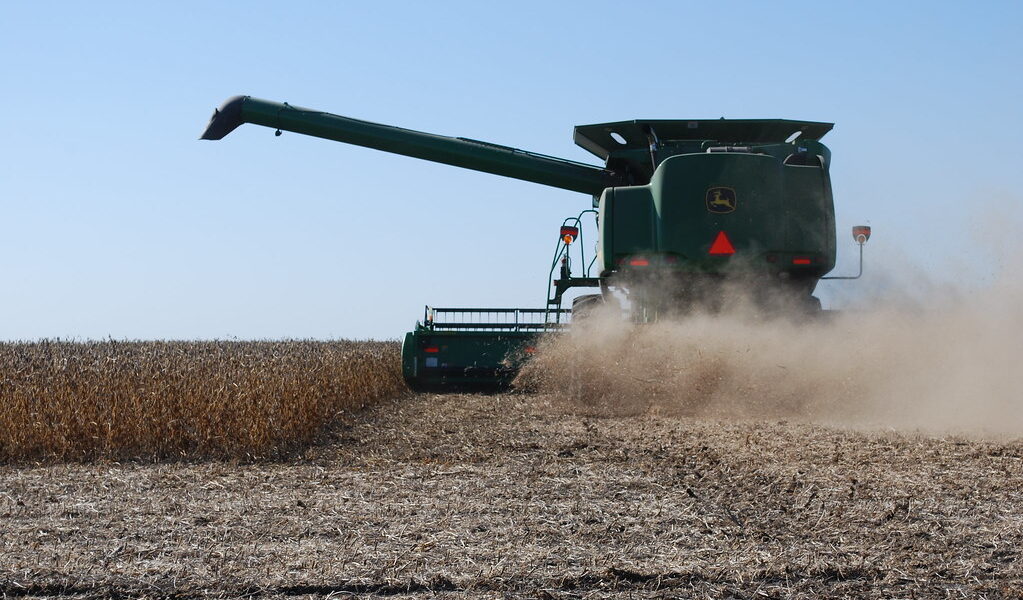
A 2,500-hectare wheat farm in Ukraine was tracking unexpected operator fatigue complaints during harvesting season. Their combine harvester operators were finishing 10-hour shifts significantly more fatigued than the previous year, despite no changes in work schedule or machine operation. The harvest manager investigated everything — seating, cab temperature, HVAC filters, air quality.
The actual problem was two worn cab isolation mounts on their Claas Lexion 780. The cab was transmitting significantly more vibration than the previous season because two of the eight cab mounts had lost over 30% of their original stiffness through compression set. The machine was operating normally — just less comfortably than intended.
New mounts, two hours of labor, and the operator fatigue issue resolved immediately.
Agricultural machinery rubber components are maintenance items that receive far less systematic attention than equivalent construction equipment parts — partly because agricultural equipment typically has lower annual operating hours, and partly because agricultural operations culture focuses more on seasonal reliability than continuous fleet management. This guide covers the rubber components that matter most in tractors, combine harvesters, and other agricultural field equipment.
Tractor Rubber Components
Cab Isolation Mounts
Modern tractor cabs are extensively isolated from the chassis through rubber mount systems. This isolation is critical for two reasons: operator comfort across multi-hour field operations, and compliance with whole-body vibration (WBV) regulations under EU Directive 2002/44/EC and equivalent national standards in other markets.
Tractor cab isolation systems use significantly more mount points than early-generation tractors:
– Older tractors (pre-2000): 4-point systems, basic rubber compression mounts
– Current generation: 6–12 point systems with progressive-rate rubber or hydraulic cab suspension on premium models
Common cab mount designs in current tractors:
– John Deere 6R, 7R, 8R series: 8-point system, stud-type mounts, progressive rate rubber
– Case IH Puma and Optum: 8-point system, conical rubber mounts
– New Holland T6, T7, T8: 6–8 point system, sandwich mount design
– Claas Arion and Axion: 8–12 point system, optional hydraulic cab suspension on Axion 900
Replacement interval: Tractor cab mounts are affected by operating hours, vibration intensity (tillage work causes more vibration than spraying), and temperature cycling. General guideline: inspect at 2,000 hours, replace at 4,000–6,000 hours or when height loss exceeds 8%.
Engine Mounts
Agricultural tractor engines are typically mounted on 3–6 rubber isolation points, with the front axle attachment often through a separate rubber-isolated front frame. Tractor engine mounts experience lower vibration amplitude than construction equipment engines — diesel speeds in tractors are typically 1,600–2,200 RPM versus 2,000–2,800 RPM in construction equipment — but the duty cycles are long during harvest and tillage seasons.
Engine mount service life: 8,000–15,000 hours under normal conditions. Significantly shorter on high-vibration applications (heavy tillage, stump grubbing, heavy loader work).
Front Axle Suspension Bushings
On suspended front axle tractors — standard on all premium tractors today — the front axle pivot bushings and suspension link bushings are wear items. The suspended front axle moves continuously over field terrain, cycling the pivot bushings thousands of times per operating hour.
John Deere TLS (Triple Link Suspension): Uses rubber-metal bushings at the suspension arm pivots. Higher wear rate in rocky terrain versus soft soil.
Case IH front axle suspension: Similar design with rubber pivot bushings at arm attachment points.
Worn front axle suspension bushings cause increased steering wheel kickback over rough terrain and, on severe wear, cause the axle to oscillate unpredictably — a safety concern at road travel speeds.
PTO Coupling Elements
Power Take-Off (PTO) driven implements connect to the tractor through rubber coupling elements at the implement input shaft. These coupling elements:
– Absorb the engagement shock when the PTO clutch engages
– Protect implement gearboxes from tractor engine torsional vibration
– Act as a mechanical fuse in overload events
PTO coupling elements are often mounted on the implement side (not the tractor) and are therefore considered implement wear items — but they follow tractor maintenance schedules because their condition depends on PTO operating hours.
Combine Harvester Rubber Components
Threshing and Separation System Vibration Mounts
Combine harvesters generate vibration from multiple sources: the engine, the threshing drum (or rotor on rotary combines), the cleaning shoe, and the straw chopper. Isolating the cab from this combined vibration is more complex than on tractors.
Cab mounts (combine harvesters): 8–12 point systems on modern combines. The higher mount count reflects the more complex vibration environment — multiple vibration sources at different frequencies require more mount points to achieve acceptable isolation.
Grain tank isolation mounts: The grain tank on large combines (Claas Lexion, New Holland CR, John Deere S and T series) sits above the threshing/cleaning system. Rubber mounts isolate the grain tank from the machine vibration to prevent grain damage from excessive movement during high-output harvesting.
Cleaning shoe mounts: The cleaning shoe (sieves and fan) on a conventional combine oscillates at a specific frequency to separate grain from chaff. The oscillation bearings and drive system use rubber elements to prevent the shoe frequency from exciting resonance in the combine frame.
Header Drive Couplings
The header (cutting platform) connects to the combine feeder house through a driveshaft with rubber coupling elements. The header encounters constant load variations — cutting into dense crop, hitting stones, slug feeding — that create severe torque impulses.
Header drive coupling elements are high-wear items on combines during harvest season. Service life can be as short as 200–400 operating hours in heavy crop conditions. Carry spare coupling elements as on-site inventory during harvest.
Draper header vs. rigid header: Draper headers (with belt conveyors rather than augers) typically create less violent coupling loading than rigid auger headers. Coupling service life is correspondingly longer on draper header combinations.
Engine Mounts (Combine Harvester)
Combine harvester engines are typically mounted on 4–6 rubber isolation points. The larger engines in premium combines (450–650 hp) have higher load-rated mounts than tractor equivalents.
Claas Lexion and Trion engines: The Mercedes-Benz OM473 and OM936 engines used in recent Lexion and Trion combines use specific mount specifications developed for the combine’s vibration environment — do not cross-reference from truck or industrial applications.
Belt Tension Idler Mounts
Combines use numerous V-belts and poly-V belts in the threshing and cleaning system. Belt tension idler pulleys are spring-loaded or rubber-mounted to maintain belt tension over the operating range.
Worn rubber-mounted idler elements allow belt tension to vary, which causes belt slip under high load and accelerated belt wear. Inspect idler mount condition at every major service.
Other Agricultural Equipment
Self-Propelled Sprayers
Modern sprayers (John Deere Hagie, Case IH Patriot, Amazone Pantera) use rubber-isolated cab systems and engine mounts similar to tractors. The additional challenge: sprayer wheels run at road speeds (40–60 km/h) on firm surfaces, generating tire-induced vibration that differs from field surface vibration.
Sprayer cab mount inspection should be part of the annual pre-season service regardless of operating hours.
Round and Square Balers
High-density square balers (Class Quadrant, New Holland BigBaler, John Deere 9 series) generate significant impact loads when the plunger drives the bale slice into the bale chamber. Rubber dampers in the plunger drive mechanism absorb these impacts.
Worn plunger drive rubber elements allow metal-to-metal impact in the drive mechanism, leading to accelerated wear of the plunger drive pins and bearings.
Forage Harvesters
Self-propelled forage harvesters (Claas Jaguar, New Holland FR, John Deere 8000 series) operate at high engine loads continuously during harvest. Engine mounts experience more sustained high-load operation than combine harvesters, which cycle between cutting periods.
Engine mount service life on forage harvesters in continuous operation: 2,000–3,000 hours — significantly shorter than for equivalent tractors.
Sourcing Agricultural Machinery Rubber Parts
Agricultural machinery rubber parts occupy a different market than construction equipment parts. The major differences:
– Strong OEM dealer networks in most markets (John Deere, Case IH, Claas dealers are typically well-stocked)
– Higher seasonality in demand (parts consumption concentrates in harvest preparation and harvest season)
– More farm-workshop servicing compared to fleet-managed maintenance
Babacan Group manufactures rubber parts for agricultural machinery including tractor cab mounts, combine cab mounts, and coupling elements for major brands. Our agricultural machinery product range covers the main European and North American brands.
For seasonal stock planning, request a quote with your machine models and expected annual parts consumption. We can plan delivery schedules around pre-harvest maintenance windows.
Key Takeaways
-
Tractor cab mount wear affects WBV regulatory compliance, not just comfort — replacement is a health and safety matter in EU jurisdictions.
-
Combine header drive coupling elements are seasonal consumables, not long-cycle maintenance items — stock them before harvest, not during.
-
Combine cleaning shoe rubber mounting affects crop separation efficiency — worn shoe mounts change the shoe oscillation amplitude, reducing cleaning efficiency.
-
Forage harvester engine mounts wear faster than tractor mounts — continuous high-load operation at sustained power levels shortens mount service life significantly.
-
Front axle suspension bushing wear on tractors is a safety issue at road speeds — include in pre-season inspection, not just workshop maintenance.
Word Count: ~1,500 words