
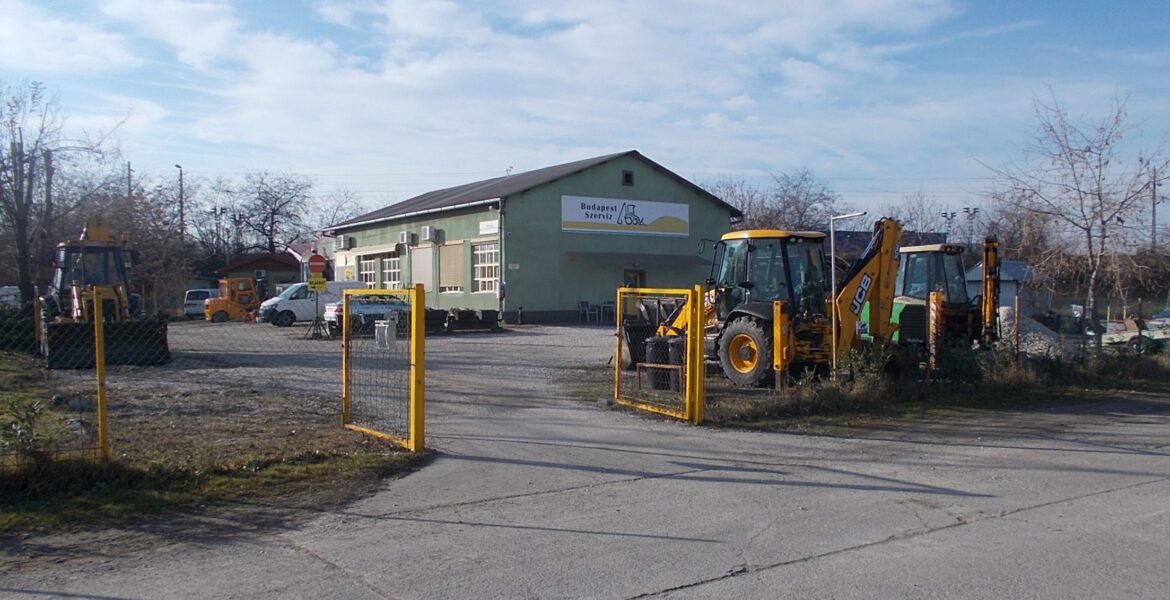
Ahmed Al-Rashidi manages a fleet of 22 backhoe loaders for a utilities contractor in Saudi Arabia. In the summer of 2024, three of his JCB 3CX loaders developed a common symptom within the same month: visible vibration at idle that operators described as the whole machine “shaking.” Diagnosis found the same failure mode on all three — all four engine mounts had hardened significantly due to the combination of sustained high-ambient temperature (45-50°C operating environment) and engine bay heat. The mounts were at 2,900 hours, within the standard service interval for moderate climates, but well past their functional life for the Saudi operating environment. Replacing all twelve mounts across the three machines cost $960. The wider lesson: ambient temperature is as important as operating hours when scheduling rubber maintenance.
Backhoe loaders are the Swiss Army knives of construction — with a front loader bucket for dozing and loading, and a rear excavating arm for trenching and digging. This versatility means the rubber components must manage vibration from both front and rear work functions, plus road travel between job sites. Their relatively compact size compared to full-size excavators makes cab isolation more challenging — there is less structural mass to attenuate vibration.
This guide covers rubber parts for the three dominant backhoe loader brands: Caterpillar (420/430/432 series), JCB (3CX/4CX series), and Komatsu (WB93/WB97 series).
Need backhoe loader rubber mounts or bushings? Babacan Group stocks components for all major backhoe brands. Request a quote.
Engine Mounts: Three-in-One Vibration Sources
Backhoe loaders run their engine for loader work, backhoe work, and road travel — three different vibration profiles that the engine mounts must manage continuously. The engine is also typically more centrally located than in an excavator, meaning isolation from the operator cab is harder to achieve by geometry alone.
CAT 420/430 Series Engine Mounts
Caterpillar’s 420F2 and 430F2 backhoe loaders use a four-point engine mounting system with the Cat 3.6 ACERT engine (73 kW). Engine mount specifications:
- Front mounts (2x): NR compound, Shore A 45-50, compression-primary orientation
- Rear mounts (2x): NR/SBR blend for the additional oil resistance near the transmission
- Operating temperature rating: Standard compound rated to +110°C (insufficient for high-ambient deployments)
- High-ambient specification: Heat-stabilized compound required for Middle East/Africa deployments
CAT 430F2 part references (OEM-compatible):
– Front mount: 4P-4506 pattern equivalent
– Rear mount: 4T-8898 pattern equivalent
High-temperature sourcing note: For machines operating continuously above 40°C ambient, specify “desert duty” or “high-ambient” compound grade. The standard mount rated to +110°C operates near its limit at 45°C ambient with engine heat addition.
JCB 3CX and 4CX Engine Mounts
JCB’s 3CX (the world’s best-selling backhoe loader) uses the JCB DieselMAX engine in current versions. The JCB backhoe mounting system is notable for its:
- Sideshift mounting on 3CX: The backhoe arm can shift laterally for working alongside walls. The backhoe arm mounting bracket uses rubber isolation pads that allow the sideshift mechanism to function while still isolating backhoe vibration from the chassis
- Four-point engine mounting: Similar to CAT configuration with NR/SBR blend for oil resistance
The 4CX (4-wheel-steering version) adds complexity because the rear axle is steerable — backhoe work with the rear axle steering activated creates different torque reactions on the chassis, affecting engine mount loading patterns.
For a comprehensive guide to JCB rubber components across their full range, see our JCB rubber mounts and spare parts guide.
Komatsu WB93/WB97 Engine Mounts
Komatsu’s WB series backhoe loaders use Komatsu’s own 4D107 (WB93R-8) and 4D107-1 (WB97R-8) engines. The mounting system uses:
– Four-point isolation with identical front and rear mount specifications (simplified maintenance)
– NR compound, Shore A 48-52
– Expected service life: 3,000-4,000 hours in standard operating conditions
Cab and ROPS Isolation
Backhoe Cab Mounting Challenges
Backhoe loader cabs sit above the chassis centerline, directly over the engine. This position means:
- The cab is exposed to engine-transmitted vibration through the shortest possible structural path
- The cab must be isolated for both low-frequency chassis motion (road travel) and higher-frequency engine vibration (work operations)
- Backhoe arm operation creates rearward longitudinal load on the cab mounting system as the machine resists bucket breakout force
JCB and CAT both use four-point cab mounting systems on their backhoe loaders. The front mounts carry more load (cab weight distribution forward) while the rear mounts provide more stiffness to resist the longitudinal loads from backhoe work.
Cab mount inspection protocol: During a backhoe work cycle, observe whether the cab visibly rocks forward when the machine operator makes a hard bucket curl or stick-in movement. Visible cab rocking indicates rear mount degradation.
Operator Platform Rubber — Ride Control
CAT 430F2 and similar models offer Ride Control — a hydraulic system that smoothes loader movement during road travel. The Ride Control accumulator uses a rubber diaphragm or bladder to store hydraulic pressure. When the accumulator rubber degrades (loss of pre-charge pressure), the Ride Control function becomes ineffective. Annual accumulator inspection and rubber element replacement at 4,000-5,000 hours maintains the system.
For context on vibration isolation and how it applies to construction equipment cabs, our construction machinery suspension parts guide provides useful background.
Stabilizer Pads and Foot Plates
Backhoe loaders deploy stabilizer arms during excavating work, lowering stabilizer feet to the ground to resist the excavating forces. The rubber pads on these feet:
- Protect paved surfaces from the steel stabilizer foot
- Distribute the stabilizer load across a larger contact area
- Must resist abrasion from rough ground surfaces
Stabilizer rubber pads are wear items — replaced more frequently than structural rubber components. Service life: 500-2,000 hours depending on working surface hardness.
Rear Stabilizer Rubber Pads
The rear stabilizers on a backhoe loader carry the majority of the excavating reaction force. Rubber pad specifications:
– Shore A 60-70 (must resist compression under excavating loads without excessive deflection)
– NR or polyurethane compound (polyurethane offers higher wear resistance on abrasive surfaces)
– Attachment: Bolted through the steel foot; pads are field-replaceable without tools in some designs
Front Stabilizer/Loader Rest Pads
When parked, the loader bucket rests on the ground through rubber contact pads. These pads:
– Prevent metal-to-metal contact between the bucket cutting edge and hard surfaces
– Allow the bucket to be lowered without damaging the working surface
These are lower-specification components than rear stabilizer pads — Shore A 50-60, NR compound, no particular load rating required.
Loader Arm and Backhoe Arm Bushings
Loader Arm Pivot Bushings
The front loader arm pivots from the machine chassis at two main points (one per side). These pivots use rubber-lined or bronze bushings:
- Main pivot: Carries the full loader arm + bucket weight (800-1,500 kg on a mid-size backhoe)
- Tilt link pivot: Smaller diameter; carries bucket tilt control linkage loads
Rubber-lined bushing wear at the loader main pivot manifests as lateral bucket play — the bucket wanders from side to side when raised. This affects grading precision and indicates the bushing requires replacement.
Backhoe Arm Pivot Bushings
The backhoe arm has more pivot points than the loader: the swing frame pivot (allows side-to-side swing), the boom pivot (vertical), the stick pivot (bucket end), and the bucket pivot itself. Each uses rubber-lined or self-lubricating bushings:
- Swing frame pivot: The largest; must resist the full sideward forces during backhoe work
- Boom to stick pivot: High cycle count; this joint cycles with every backhoe dig cycle
- Bucket pin bushings: Highest wear rate due to abrasive material (soil, gravel, rock) contaminating the bushing area
Bucket pin bushing replacement is the most frequent bushing service task on a backhoe loader — typically required every 500-1,500 hours depending on material type.
For comparison with larger excavator bushing requirements, see our excavator engine mounts guide for CAT, Komatsu, and Volvo.
Axle and Drivetrain Rubber Components
Front Axle Rubber Mounts (4WD Models)
4WD backhoe loaders (CAT 430F2 4WD, JCB 3CX 4WD, Komatsu WB97) add a front axle drive system. The front axle mounts to the frame through rubber cushions that:
– Allow front axle articulation for rough terrain following
– Damp axle-generated vibration from 4WD engagement
The front axle cushion/mount on a 4WD backhoe wears faster than on 2WD models because the 4WD engagement creates additional torque reactions on the mount.
Transmission Flex Mounts
The powershift or torque converter transmission mounts to the engine/chassis through rubber-isolated brackets. These are lower-specification mounts than engine mounts but important for:
– Preventing transmission gear noise from transmitting to the cab
– Allowing slight misalignment between engine output and transmission input
Hydraulic System Seals
Backhoe loaders run hydraulic pressures of 210-250 bar in main circuits, with the backhoe/loader sharing a common hydraulic supply. Seal quality affects both loader performance and backhoe digging force.
Common hydraulic failure points:
– Backhoe cylinder seals: High cycle count, abrasive contamination from excavating — replace at 3,000-5,000 hours
– Loader cylinder seals: Moderate cycle count; more likely to fail from UV and ozone aging than wear
– Sideshift cylinder seals (3CX): Lower cycle count but exposed to external contamination
Whole-Body Vibration Compliance for Backhoe Operators
EU Directive 2002/44/EC on whole-body vibration applies fully to backhoe loader operators. Studies have measured whole-body vibration levels on backhoe loaders during road travel (typically the highest-exposure mode) at 0.6-1.0 m/s² A(8) — above the action value in many cases.
Maintaining cab isolation rubber in specification is the most cost-effective measure for keeping operator vibration within regulatory limits. A backhoe loader with degraded cab mounts during road travel can exceed the 1.15 m/s² limit value specified in the Directive.
Babacan Group manufactures backhoe loader rubber components under ISO 9001:2015 quality management. Our range covers CAT 420/422/424/430/432 series, JCB 3CX, 3CX Pro, 4CX, and 5CX series, Komatsu WB70, WB93, WB97 series, and Case 580/590/695 series backhoe loaders. Browse our rubber mounts catalog or request a quote.
Replacement Intervals
| Component | Standard Climate | Hot Climate (>35°C) |
|---|---|---|
| Engine mounts | 3,000-4,000 hrs | 1,800-2,500 hrs |
| Cab isolation mounts | 2,500-3,500 hrs | 1,500-2,500 hrs |
| Rear stabilizer pads | 500-1,500 hrs | 500-1,200 hrs |
| Loader arm pivot bushings | 2,000-4,000 hrs | 2,000-3,500 hrs |
| Backhoe arm boom/stick bushings | 1,500-3,000 hrs | 1,500-2,500 hrs |
| Bucket pin bushings | 500-1,500 hrs | 400-1,200 hrs |
| Hydraulic cylinder seals | 3,000-5,000 hrs | 2,500-4,000 hrs |
Conclusion
Backhoe loader rubber parts work across three modes simultaneously — loader work, backhoe digging, and road travel — with different vibration profiles and load requirements for each. The compact machine layout makes isolation more critical, and the high ambient temperature environments where many backhoe loaders operate significantly accelerate rubber aging.
Key takeaways:
– High ambient temperature is as important as operating hours in scheduling engine and cab mount replacement
– Stabilizer rubber pads are site-specific wear items — harder working surfaces require more frequent replacement
– 4WD models consume front axle mounts faster than 2WD counterparts
– Backhoe operator vibration exposure during road travel often exceeds the EU action value — maintain cab mounts in specification
Babacan Group ships backhoe loader rubber parts to contractors and equipment dealers in 84+ countries. Request a quote with your model and operating environment.