
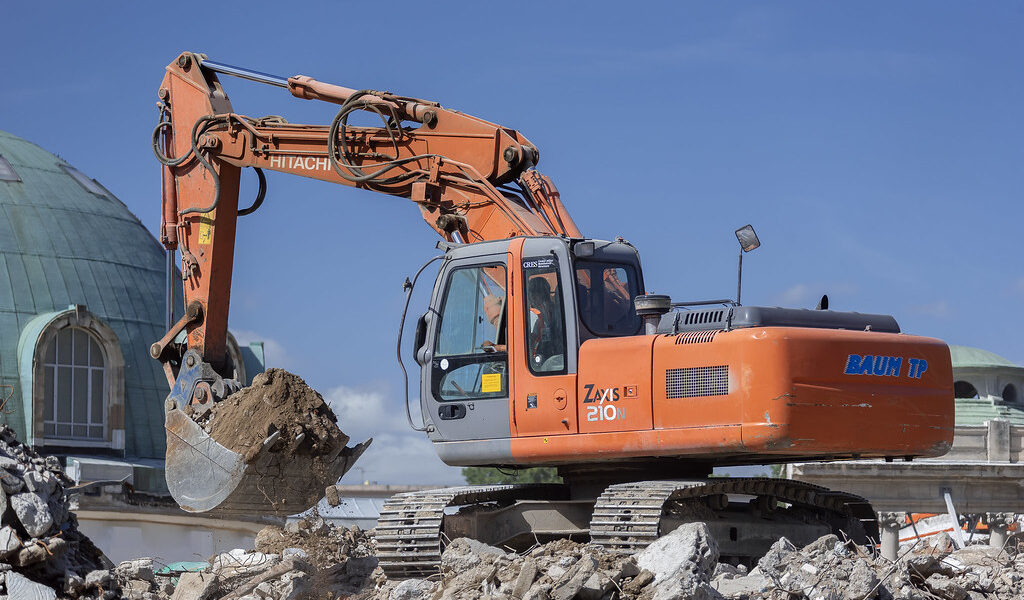
A major contractor in Southeast Asia was running a mixed fleet of Hitachi ZX350-6 and Komatsu PC360-8 excavators on the same project. Routine service revealed the Hitachi machines were consistently showing more advanced cab mount wear at the same operating hours. Not dramatically more — but measurably more.
The investigation found the answer in the work cycle: the Hitachi ZX350-6 machines were digging primarily in laterite rock, which generated higher-amplitude track vibration during repositioning than the clay and gravel the PC360s were working in. Same hours, different vibration input, faster mount wear. Adjusting the cab mount replacement interval on the Hitachi machines from 5,000 hours to 3,500 hours for that application resolved the issue before secondary cab frame fatigue damage occurred.
Application context matters as much as machine specification when setting rubber component maintenance intervals. This guide covers Hitachi ZX series excavator rubber parts across the ZX120 to ZX890 range, with practical guidance for fleet operators.
Hitachi ZX Series Overview
Hitachi Construction Machinery (HCM) produces excavators across a broad weight range under the ZX (ZAXIS) brand. The current generation includes:
- ZX120 to ZX225: Small to medium class, widely used in urban construction and utility work
- ZX250 to ZX390: Medium-large class, the workhorse range for infrastructure and quarry
- ZX490 to ZX690: Large class, used in large infrastructure, quarry, and mining
- ZX890 and ZX1200: Mining class excavators
Hitachi has a historical connection with Volvo CE (the companies had a joint venture for excavator sales in Europe until the early 2000s). Some part numbers and component specifications carry over from this relationship — but this cross-compatibility ended at the ZX-5 generation. Never assume Hitachi-Volvo cross-compatibility on ZX-6 and newer machines.
ZX200 Series: Rubber Components
Engine Mounts (ZX200-5, ZX200-6, ZX210)
The ZX200 series uses the Isuzu 4HK1 or 6HK1 engine depending on variant, mounted on a 4-point rubber isolation system. Key specifications:
Front mounts: Higher longitudinal stiffness to control engine movement under torque reaction. The ZX200-6 uses a conical front mount design — different from the sandwich mount used on ZX200-5.
Rear mounts: Cylindrical rubber-metal mounts at the rear engine supports. Higher vertical load rating than front mounts.
Generation difference: ZX200-5 and ZX200-6 engine mounts are not directly interchangeable. The -6 generation includes a revised front mount geometry that improves engine positioning accuracy for the hydraulic pump coupling alignment. Installing -5 mounts on a -6 machine affects pump coupling alignment.
Service interval: Inspect at 2,000 hours. Replace at 6,000–8,000 hours under normal conditions, 4,000–5,000 hours in hard rock or demolition applications.
Cab Mounts (ZX200 Series)
Hitachi ZX200 cab uses a 4-point rubber isolation system. Hitachi’s mount design on the ZX200 series uses a bolt-through configuration — the cab floor panel bolt passes through the rubber element, compressing it between the cab floor and the chassis bracket.
Common failure mode: The bolt-through design creates a failure path if the rubber loses height (compression set). As the rubber compresses permanently, the bolt clamps the cab floor closer to the chassis bracket, which changes the preload on the rubber element and alters its stiffness. An element that has lost 15% of its height is not just 15% less effective — the altered preload condition can make it significantly stiffer, transmitting more vibration than a new mount.
Measure cab mount height at each major service. Replace when height loss exceeds 5%.
Hydraulic Pump Coupling (ZX200)
The ZX200 main pump coupling is a disc-type rubber element. Access requires removing a bell housing cover panel — budget 45 minutes for inspection access alone. Service the coupling at every 2,000 hours given the access time investment.
ZX350 and ZX360 Series
Engine Mounts (ZX350-5, ZX350-6)
6-point mounting system with the 6HK1-XCC engine. Higher load ratings than ZX200 series — do not mix specifications between size classes.
The ZX350-6 introduced a revised rear lower mount position compared to ZX350-5. The -6 rear lower mounts are partially enclosed by the DEF/AdBlue tank mounting structure, reducing cooling airflow. This mirrors the issue seen on Komatsu PC360-8 rear lower mounts — inspect these positions first when investigating vibration complaints.
ZX350-6 Cab Mounts
8-point cab isolation system on ZX350-6. The additional mount points allow a softer overall isolation system — the ZX350-6 was specifically improved for operator comfort over the ZX350-5 in Hitachi’s product documentation.
Replacement note: When replacing ZX350-6 cab mounts, replace all 8 units simultaneously. The 8-point system is designed as a matched set — mixing new and old mounts creates uneven compliance that can cause cab alignment issues.
Swing Ring Cushions (ZX350 Series)
Some ZX350 configurations include rubber cushion elements in the swing ring mounting that reduce vibration transmission from the upperstructure swing drive into the undercarriage during active swing. These are not visible without removing the swing motor guard and inspecting the mounting interface. Check at major overhaul.
ZX490 and ZX530 Series (Large Excavators)
Engine Mounts (ZX490-6)
The ZX490-6 uses the Isuzu 6WG1-XAS engine at approximately 2,100 kg. 6-point mounting system with high load-rated mounts.
Critical point: The ZX490-6 engine mount specifications were revised at production serial number ZX490H-6 prefix change (verify with Hitachi technical documentation for exact serial range). Machines before and after this change use different mount geometry at the front positions. Supplying parts requires knowing the exact serial number prefix.
Cab Mounts (ZX490-6)
Large Hitachi machines use a ROPS cab structure rather than a cab-only design. The ROPS structure mounts to the chassis through 8 isolation points. On ZX490 class, these mounts carry significantly higher loads than on smaller machines — the larger ROPS structure is heavier, and the larger machine generates higher vibration amplitude.
Inspect ZX490 cab/ROPS mounts at every 1,000 hours. Service life in production digging applications: 3,000–4,500 hours.
Travel Motor Rubber Mounts (ZX490)
Large Hitachi excavators use rubber-isolated travel motor mounting on some configurations. The travel motors on ZX490 class machines are significantly larger than on smaller models, and their vibration during travel is more pronounced. Worn travel motor mounts contribute to undercarriage frame fatigue cracking in high-travel applications.
ZX890 and Mining Class
At ZX890 and above, Hitachi excavators are used primarily in open-pit mining. Rubber component specifications at this class are factory documents:
- ZX890 engine weight exceeds 3,500 kg — load ratings far outside standard catalog ranges
- Mining duty cycles (6,000+ annual hours) require compound specifications for high-fatigue resistance
- ZX890 cab isolation uses active hydraulic damping on some configurations — requires specialist maintenance
Provide machine serial number to Babacan Group technical team for correct specification at this size class.
Hitachi-Specific Maintenance Notes
Greasing the Boom and Arm Pivot Pin Bushings
Hitachi ZX series boom, arm, and bucket pin bushings use self-lubricating rubber-lined bushings in some positions and standard metal bushings with grease fittings in others. The distribution varies by machine configuration.
Critical check: Do not assume all pivot positions are self-lubricating. Verify which positions have grease fittings by inspecting the machine physically. Missing a greased position causes rapid bushing wear on a pin that you thought was maintenance-free.
Countershaft Coupling (ZX Models with PTO)
Some ZX excavators configured with power take-off (PTO) for hammer attachment have an additional coupling element in the PTO drive circuit. This element is often overlooked in maintenance planning because it is not part of the main machine drive system. Service it at the same interval as the main hydraulic pump coupling.
Sourcing Hitachi ZX Rubber Parts
Hitachi Construction Machinery’s dealer network provides genuine OEM parts for current-generation ZX machines. For older machines (ZX200-3, ZX350-3, ZX450-3 and earlier), dealer support becomes inconsistent.
Babacan Group maintains rubber component specifications for Hitachi ZX series machines across multiple production generations. Our cross-references cover ZX120 through ZX890 for cab mounts, engine mounts, and pump coupling elements. We supply to Hitachi dealers, fleet operators, and construction contractors worldwide.
Browse our rubber mount catalog or request a quote with your ZX machine serial number and required parts.
Key Takeaways
-
ZX200-5 and ZX200-6 engine mounts are not interchangeable — the -6 generation front mount geometry change affects pump coupling alignment.
-
Bolt-through cab mount height must be measured at service — compression set changes preload and alters stiffness beyond what height loss alone suggests.
-
ZX350-6 rear lower engine mounts age faster — restricted airflow from DEF tank structure. Inspect these first.
-
ZX490-6 engine mount specification changed mid-production — serial number prefix required to confirm correct specification.
-
Verify which pivot positions are greased vs. self-lubricating — Hitachi ZX series mixes both types, and assuming all are self-lubricating causes preventable wear.
Contact Babacan Group for Hitachi ZX rubber part specifications across all production generations.
Word Count: ~1,450 words