
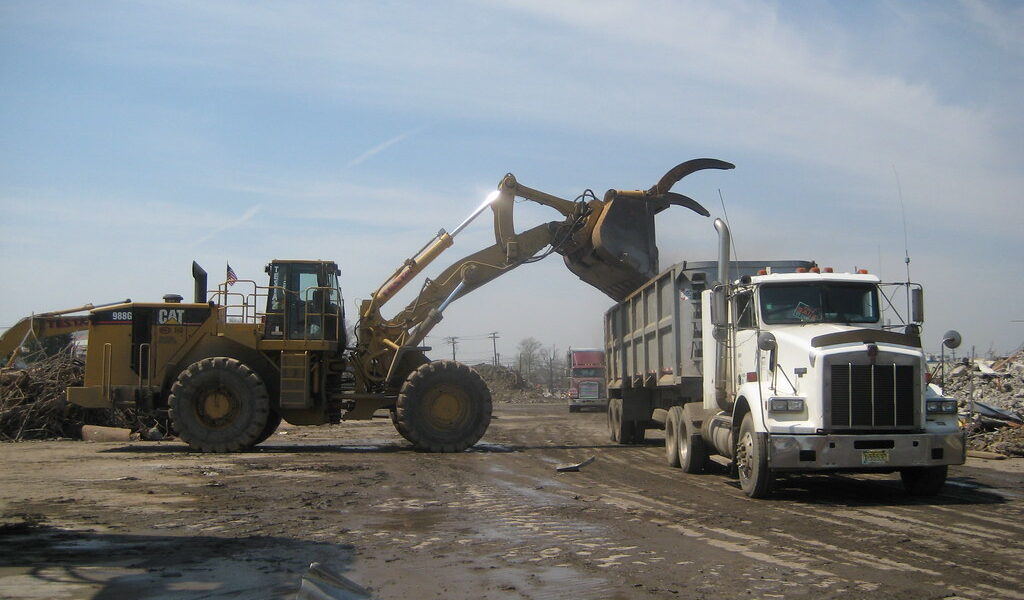
A quarry manager in Oman was puzzled by a vibration problem on a CAT 980M wheel loader. The machine would develop a pronounced cab shake at certain engine RPM ranges — particularly during loaded travel from the stockpile to the crusher. The machine was only 3,200 hours old. Technicians initially suspected engine mounts, but testing found engine isolation was within spec. The actual failure: one of the six cab isolation mounts had fractured at the rubber-to-metal bond — a failure mode caused by using a non-OEM mount with incorrect bonding compound that had insufficient adhesion at high ambient temperature (the Omani quarry operated at sustained 45°C+ through summer). Four replacement OEM-specification cab mounts restored normal isolation. The lesson: at 45°C ambient, rubber compound and rubber-to-metal bond specification matter as much as the load rating.
CAT wheel loaders — from the compact 950 class through to the 994K ultra-class — are the most widely deployed large wheeled loading machines in the world, working in quarries, ports, mining, and construction. This guide covers rubber parts for CAT wheel loaders across the full size range, with specific attention to articulation joint rubber, cab isolation, and engine mounting.
Babacan Group manufactures OEM-specification rubber parts for CAT wheel loaders. Request a quote for your CAT loader model.
Articulation Joint Rubber: Unique to Wheel Loaders
The articulated steering system is what distinguishes wheel loaders from other heavy equipment — and the articulation joint is the highest-wear rubber component unique to this machine type.
Front-to-Rear Frame Articulation Bushings
The articulation hinge (between the front and rear frame) uses rubber-metal bonded bushings or polyurethane bushings at the upper and lower pivot pins. These allow the machine to steer by bending the frame — with angles up to 40° in each direction.
CAT 966–994 articulation bushing specifications:
– Material: Heavy-duty rubber-metal bonded (smaller loaders) or polyurethane (larger loaders for higher load capacity)
– Shore A: 65-80 for rubber-metal; 85-95 Shore D for polyurethane versions
– Replacement interval: 3,000-5,000 hours for rubber; 6,000-8,000 hours for polyurethane
– Failure mode: Wear through the rubber leading to metal-to-metal contact and pin wear — manifests as clunk during steering and eventual steering imprecision
On CAT 980M and 982M loaders, articulation bushing wear is one of the top-3 most common maintenance items reported by quarry fleet managers. High-cycle loading operations (short-cycle push-and-load at a crusher feed) articulate the machine several hundred times per hour, accumulating bushing cycles faster than lower-frequency operations.
Steering Cylinder Bushings
The hydraulic steering cylinders that drive articulation also use rubber bushings at their eye ends. These bushings:
– Accommodate the angular misalignment between cylinder axis and frame pin
– Prevent metal-on-metal contact at cylinder pivot points
– Absorb micro-impacts during steering direction changes
Steering cylinder bushing replacement is typically combined with articulation hinge bushing replacement at scheduled intervals.
Engine Mounting for CAT Wheel Loaders
CAT wheel loaders use Cat’s own C-series engines across the range — C7 through C18 ACERT and Cat C32 depending on model. Engine isolation mounting varies significantly across the size range.
CAT 950 Series (950M, 950GC) Engine Mounts
CAT 950 series uses Cat C7.1 engine (130-145 kW). Engine mount specifications:
– Quantity: 4-point system
– Shore A: 48-54
– Compound: NR/SBR oil-resistant blend
– Temperature range: -30°C to +100°C standard; heat-stabilized compounds for Middle East and Central Asia
CAT 966 Series (966M, 966L) Engine Mounts
CAT 966 uses Cat C9.3 ACERT (194 kW). This is Caterpillar’s best-selling mid-class loader globally:
– Shore A: 52-58 (slightly firmer than 950 due to higher torque)
– Compound: Heat-stabilized NR for desert quarry deployments
– Load per mount: 280-350 kg
CAT 966 is the benchmark machine for quarry loading in many markets. Engine mount inspection at 2,500-hour intervals is standard practice on high-cycle quarry machines.
CAT 972 Series (972M, 972XE) Engine Mounts
CAT 972 (Cat C13 ACERT, 252 kW):
– Shore A: 55-62
– Compound: NR with oil and heat resistance
– Mounting quantity: 4-6 mounts depending on variant
– Load per mount: 380-460 kg
CAT 980 Series (980M, 980L, 980K) Engine Mounts
The CAT 980 series is a significant step up in power and weight class. Cat C15 ACERT (319 kW):
– Shore A: 58-65
– Compound: NR/SBR for high torque and heat resistance
– Load per mount: 480-580 kg
– Note: The Omani quarry case above occurred on a 980M — 45°C ambient requires heat-stabilized compound or accelerated degradation results
CAT 988 Series (988K, 988H) Engine Mounts
CAT 988K (Cat C27 ACERT, 447 kW):
– Shore A: 60-68
– Compound: Heat-stabilized NR for sustained high ambient temperature operation
– 6-point mounting system on 988K
– Load per mount: 600-750 kg
CAT 994 (994K, 994H) Engine Mounts — Ultra Class
The CAT 994K (Cat C175-16, 1,019 kW) is the world’s largest production wheel loader. Engine mount specifications at this scale:
– Shore A: 62-70 (very firm mounts for the massive engine assembly)
– Compound: High-temperature NR — engine compartment temperatures at this power level can exceed +120°C at mount locations
– Mounting quantity: 8+ points
– Service weight of engine assembly: 8,000+ kg
For comparison with excavator engine mount specifications, see our excavator engine mounts guide for CAT, Komatsu, and Volvo.
Cab Isolation: Critical for Operator Health in Cycle-Loading
CAT wheel loaders working in quarry, mining, or port applications run in a continuous short-cycle loading pattern — full-throttle acceleration, bucket fill, loaded travel, dump, return. This creates high-frequency whole-body vibration exposure if cab isolation is not maintained.
CAT 966–994 Cab Mount System
CAT uses a 6-point cab isolation mount system on the 966 and above — four corner mounts and two front mounts at the cab toe. This 6-point arrangement provides better horizontal vibration isolation than simpler 4-point systems, important in wheel loaders where fore-aft vibration from terrain input is significant.
Cab mount specifications (CAT 966–988 range):
– Front mounts: Shore A 38-45 (soft — primary isolation for operator-position vibration)
– Rear mounts: Shore A 45-52 (stiffer — structural support)
– Temperature rating: -40°C to +110°C (standard range covers global deployment)
– Compound: NR (natural rubber) — chosen for its low dynamic stiffness ratio and natural damping
Vibration isolation in wheel loader cabs is particularly challenging because the machine must respond dynamically to steering inputs and terrain variation while the cab must remain stable for the operator. Overly soft mounts (below Shore A 35) allow excessive cab movement during hard cornering; overly firm mounts (above Shore A 60) transmit terrain vibration directly.
For detailed guidance on wheel loader cab mount systems across brands, see our wheel loader rubber mounts guide.
Lift Arm and Bucket Linkage Rubber
Lift Arm Pivot Bushings
The Z-bar or parallel loader linkage that connects the boom arms to the lift cylinders uses rubber-metal bushings at all pivot points. CAT’s Z-bar linkage typically uses 8-12 pivot pins, each with rubber or polyurethane bushings:
- Standard NR bushings: For loaders in softer material (sand, topsoil, aggregate)
- Polyurethane bushings: For rock and heavy quarry duty — higher load capacity and longer service life at the cost of slightly reduced vibration absorption
Lift arm bushing inspection at each 1,000-hour service is recommended. Early signs of wear: audible knocking in the linkage during bucket fill, visible grease purging from overstressed bushings.
Bucket Pin Rubber Guards
CAT wheel loader buckets use rubber pin-retention guards at each bucket tooth mounting point. These rubber elements prevent soil and rock from packing around the tooth adapter pins, extending tooth adapter service life.
Hydraulic System Rubber
Hydraulic Cylinder Seals
CAT wheel loader lift and tilt cylinders use standard hydraulic seal construction:
– Rod seal: Polyurethane lip seal or NBR multi-lip seal
– Piston seal: Double-acting NBR or polyurethane
– Guide rings: PTFE-composite for low friction
– Wiper seal: NBR lip wiper to exclude contamination from the rod
Hydraulic oil pressure in CAT loader lift circuits: 250-350 bar standard, with up to 400 bar at relief valve setting.
Hydraulic Hose Connections
O-ring face seal (ORFS) connections are the CAT standard for high-pressure hydraulic connections. These O-rings (NBR compound) require replacement whenever hydraulic connections are opened during service — reusing deformed O-rings under hydraulic pressure creates slow leaks that become fast leaks under full operating pressure.
Shore Hardness Testing for Wheel Loader Rubber
In-service Shore A testing provides condition data beyond visual inspection:
| Component | Target Shore A | Replace Threshold |
|---|---|---|
| Engine mounts (950-966) | 48-58 | >70 or <35 |
| Engine mounts (980-994) | 58-70 | >80 or bond cracking |
| Cab mounts (front) | 38-45 | >60 or <28 |
| Cab mounts (rear) | 45-52 | >65 or <35 |
| Articulation bushings | 65-75 | Metal exposure or >30% wear |
Replacement Intervals by Model Size
| Component | 950/966 | 972/980 | 988/994 |
|---|---|---|---|
| Engine mounts | 4,000 hrs | 3,500 hrs | 3,000 hrs |
| Cab mounts | 3,500 hrs | 3,000 hrs | 2,500 hrs |
| Articulation bushings | 4,000 hrs | 3,500 hrs | 3,000 hrs |
| Lift arm bushings | 3,000 hrs | 3,000 hrs | 2,500 hrs |
| Hydraulic cylinder seals | 5,000 hrs | 4,500 hrs | 4,000 hrs |
These are standard duty (aggregate, sand, general earthworks) intervals. Quarry (hard rock) duty: reduce by 25-35%.
Conclusion
CAT wheel loaders demand rubber parts that match the wide range of operating conditions — from compact 950 loaders in urban construction to 994K ultra-class machines in open-pit mining, each with distinct compound requirements and load ratings.
Key maintenance priorities for CAT wheel loader rubber:
– Articulation joint bushings are the highest-cycle rubber component unique to wheel loaders — inspect every 1,000 hours
– Cab isolation requires position-specific Shore A specifications — front mounts must be softer than rear
– High ambient temperature deployments (Middle East, Central Asia) require heat-stabilized NR compound — standard compounds degrade 30-40% faster above 40°C ambient
– CAT 994K engine mounts require high-temperature compounds rated to +130°C in the engine compartment
Babacan Group manufactures CAT wheel loader rubber parts under ISO 9001:2015 certification for all models from 950 to 994. Browse our rubber parts catalog for CAT loader parts or request a technical quote.