
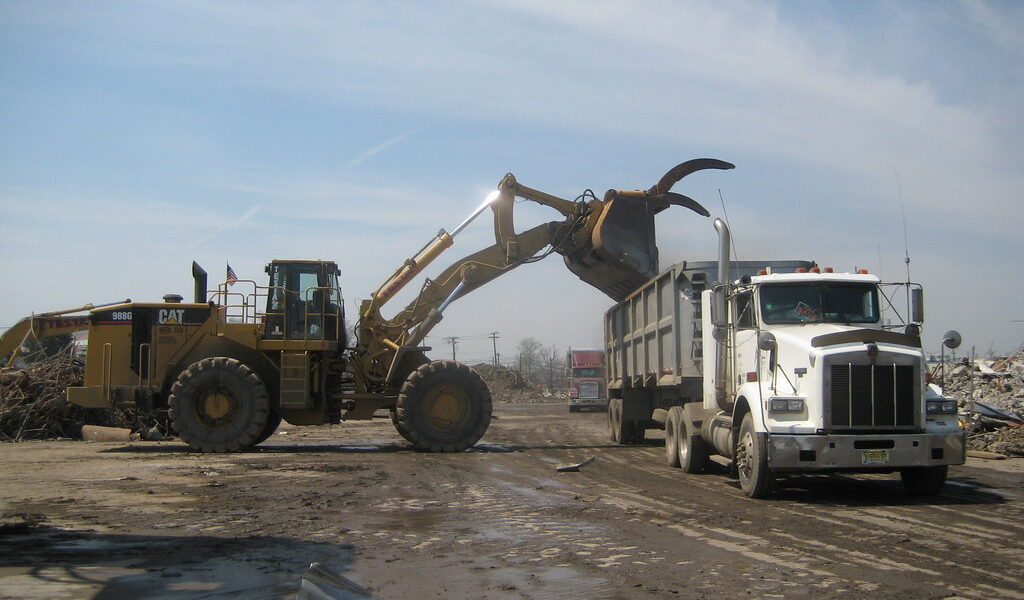
A port operations manager in Jeddah was reviewing fuel and maintenance costs on a fleet of five Komatsu WA380-8 wheel loaders handling container yard bulk operations. One machine was consistently 8-12% higher on fuel consumption than the others. An engine diagnostic found no fault codes. A vibration survey found the problem: both engine mounts on the left side had softened significantly — Shore A tested at 28, against the 52-58 specification for new mounts. Soft engine mounts allow the engine to move excessively in the frame, creating minor but persistent misalignment in the torque converter coupling. This misalignment adds drivetrain friction and reduces torque transfer efficiency — directly increasing fuel consumption. Four new engine mounts corrected both the vibration problem and returned fuel consumption to fleet-normal levels. Mount replacement cost: $320. Monthly fuel savings at four machines: $850.
Komatsu WA-series wheel loaders — spanning from the WA200 compact through to the WA900 ultra-class — are deployed globally in quarrying, mining, port operations, and construction. This guide covers rubber part specifications for the most common WA models and the specific maintenance requirements of articulated wheel loaders.
Need Komatsu wheel loader rubber parts? Request a quote from Babacan Group — OEM-specification rubber parts, 84+ countries served.
Articulation Joint Rubber: The Critical Differentiator
Like all articulated wheel loaders, Komatsu WA-series machines steer by articulating the frame between front and rear sections. The articulation bushing system accumulates cycles fast in loading-cycle operations.
WA-Series Articulation Bushing Specifications
Komatsu uses rubber-metal bonded bushings in smaller WA models (WA200-WA380) and transitions to polyurethane or spherical bearings for larger WA500 and above. Key specifications:
WA200/WA250 articulation bushings:
– Material: Rubber-metal bonded
– Shore A: 68-75
– Replacement interval: 3,500-4,500 hours
WA380 articulation bushings (most common model):
– Material: Rubber-metal bonded or polyurethane (variant-dependent)
– Load rating: High — WA380 operating weight approximately 17 tonnes
– Replacement interval: 3,000-4,000 hours in standard quarry cycle
WA500/WA600/WA900 articulation:
– Material: Polyurethane for high-load durability
– Shore D: 88-95
– Replacement interval: 5,000-7,000 hours for polyurethane
High-cycle quarry loading operations (short push-load cycles at a crusher) wear articulation bushings significantly faster than general earthworks — the machine may articulate 300-400 times per hour in a tight loading pattern, versus 40-60 times per hour in long-cycle dump work.
Engine Isolation Mounts for Komatsu WA Series
Komatsu WA-series loaders use Komatsu’s own SAA (Super After-treatment Architecture) Tier 4 diesel engines. Engine mount specifications vary with model size.
WA200-8 Engine Mounts
Komatsu WA200 (Komatsu SAA4D95LE, 97 kW):
– Mount quantity: 4-point
– Shore A: 48-54
– Compound: NR/SBR blend for general applications
– Temperature rating: -30°C to +100°C
WA320/WA380-8 Engine Mounts
The WA380 is Komatsu’s highest-volume large wheel loader — very common in quarry, port, and aggregate operations:
– Engine: Komatsu SAA6D125E (215 kW)
– Shore A: 52-58
– Compound: Heat-stabilized NR for Middle East and South Asian deployments
– Load per mount: 260-330 kg
The Jeddah port case described above — with softened WA380 mounts at Shore A 28 causing 8-12% fuel efficiency loss — demonstrates that engine mount condition has quantifiable operating cost consequences beyond vibration and noise.
WA430/WA470 Engine Mounts
WA470-8 (Komatsu SAA6D140E, 277 kW):
– Shore A: 55-62
– Compound: High-temperature NR
– Load per mount: 350-420 kg
WA500-8 Engine Mounts
WA500-8 (Komatsu SAA6D170E, 371 kW) — a major quarry and mining loader:
– Shore A: 58-66
– Compound: NR with heat stabilization
– Mount quantity: 6-point mounting system
– Load per mount: 480-560 kg
– Note: WA500 often runs near crusher feeds at extended idle — engine mount heat exposure from hot exhaust gas in the engine bay requires heat-stabilized compound
WA600/WA900 Engine Mounts — Large Class
WA600-8 (Komatsu SAA6D170E-7, 535 kW):
– Shore A: 62-70
– Compound: High-temperature NR
– 8-point mounting system
– Service life at this power level: 2,500-3,000 hours
For detailed specification comparisons across excavator and loader engine mounts, see our Komatsu excavator rubber parts guide.
Cab Isolation for Komatsu WA-Series Loaders
Komatsu WA cab isolation systems use 4-point (smaller models) or 6-point (WA380 and above) isolation mount arrangements. Komatsu’s ROPS-certified cabs are engineered for extended-shift comfort in loading-cycle operations.
WA380-8 Cab Mount System
The WA380 cab uses a 6-point isolation system with position-differentiated rubber compounds:
– Front cab mounts: Shore A 38-46 (softer — attenuates fore-aft vibration from terrain input)
– Rear cab mounts: Shore A 46-54 (stiffer — supports cab structure)
– Temperature rating: -40°C to +110°C
Vibration isolation targets for Komatsu WA-series cabs: vertical vibration below 0.5 m/s² RMS at operator seat rail across normal operating speed range.
Komatsu’s VHMS (Vehicle Health Management System) on WA380-8 and newer models logs vibration data that can flag abnormal cab vibration. If VHMS vibration alerts appear outside normal machine events, cab mount condition is the first diagnostic check.
WA500/WA600 Cab Mounts
Larger WA-series cabs are heavier — more KOMTRAX electronics, larger display systems, and heavier ROPS structure. WA500 cab mount specifications:
– Shore A: 42-50 (front), 50-58 (rear)
– Load per mount: 280-360 kg (increased from WA380 due to cab weight)
– Temperature: -40°C to +110°C with heat-stabilized option to +130°C for very hot climate deployment
For comprehensive coverage of wheel loader cab and engine mount systems across brands, see our wheel loader rubber mounts guide.
Hydraulic Cylinder Seals
Komatsu WA-series loader lift and tilt hydraulic cylinders use a standard seal package:
– Rod seal: Polyurethane lip seal (primary) + NBR secondary seal
– Piston seal: Double-acting NBR or polyurethane for higher pressure applications
– Guide ring: PTFE-composite for reduced friction
– Wiper seal: NBR single-lip wiper to exclude external contamination
Hydraulic working pressure: WA380-8 lift circuit at 270-310 bar. WA600/WA900 lift circuits at 320-360 bar.
Seal life factors: hydraulic oil cleanliness has a larger effect on seal life than most operators realize. ISO 16/14/11 hydraulic oil cleanliness extends seal life by 40-60% over ISO 18/16/13 cleanliness levels common in improperly maintained systems.
Steering Cylinder Seals
Articulation steering cylinders use the same seal package but see the highest cycle frequency of any loader cylinder. WA380 steering cylinders typically complete 250,000-400,000 full strokes in their service life. Replacement interval: 4,000-6,000 hours.
Undercarriage and Axle Rubber
Axle Pivot Rubber Bushings
Komatsu WA-series loaders use an oscillating rear axle that pivots to keep all four tyres in ground contact on rough terrain. The rear axle oscillation pivot uses rubber or polyurethane bushings:
– Rubber-metal bonded type (WA200-WA380): Compound NR, Shore A 58-65
– Polyurethane type (WA500+): Shore D 85-90
Rear axle oscillation bushing wear shows as a rhythmic thumping sound during loaded travel over uneven terrain. Replace when wear exceeds 5 mm of bushing clearance.
Drive Shaft Centre Support Rubber
The propeller shaft connecting the torque converter to the front axle (or to the rear axle on full-frame all-wheel drive configurations) has a centre bearing with rubber isolation. This rubber:
– Absorbs driveline vibration at the centre bearing
– Accommodates slight driveline misalignment
Shore Hardness Testing and Condition Monitoring
| Component | New Shore A | Action Threshold |
|---|---|---|
| Engine mounts (WA380) | 52-58 | <35 or >72 |
| Engine mounts (WA600) | 62-70 | <45 or >82 |
| Cab mounts (front) | 38-46 | <28 or >60 |
| Cab mounts (rear) | 46-54 | <35 or >68 |
| Articulation bushings | 68-75 | Metal contact or >25% wear |
Replacement Intervals for Komatsu WA Series
| Component | WA200/320 | WA380/430 | WA500/600 | WA900 |
|---|---|---|---|---|
| Engine mounts | 4,500 hrs | 4,000 hrs | 3,500 hrs | 3,000 hrs |
| Cab mounts | 4,000 hrs | 3,500 hrs | 3,000 hrs | 2,500 hrs |
| Articulation bushings | 4,000 hrs | 3,500 hrs | 5,000+ hrs (PU) | 5,000+ hrs (PU) |
| Lift arm bushings | 3,500 hrs | 3,000 hrs | 3,000 hrs | 2,500 hrs |
| Cylinder seals | 5,500 hrs | 5,000 hrs | 4,500 hrs | 4,000 hrs |
Conclusion
Komatsu WA wheel loaders span from compact utility machines to ultra-class open-pit loaders — each requiring rubber parts matched to their specific power output, operating environment, and duty cycle intensity.
Key takeaways for Komatsu WA wheel loader rubber maintenance:
– Engine mount softening has a measurable effect on fuel efficiency — not just vibration and noise
– WA380 articulation bushings are high-frequency wear items in quarry loading operations
– WA500 and above transition to polyurethane articulation bushings for extended service life
– Heat-stabilized compound is essential for Middle East, North African, and South Asian deployments
Babacan Group manufactures Komatsu WA wheel loader rubber parts under ISO 9001:2015 quality management, covering WA200 through WA900. Browse our rubber parts catalog or request a technical quote with your Komatsu WA model.