
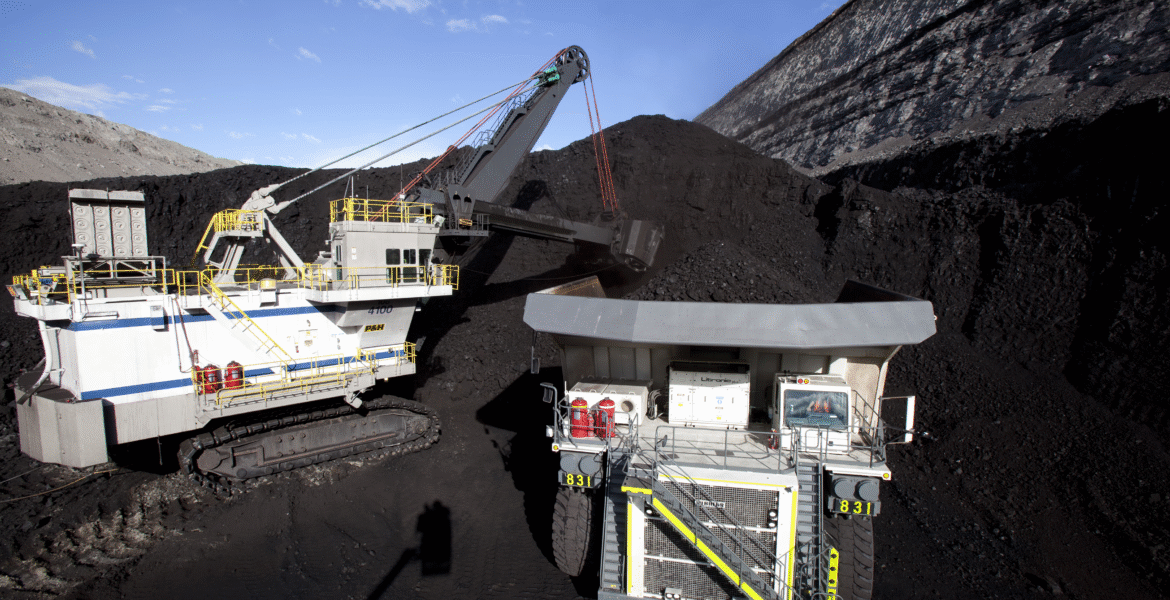
A mine maintenance engineer at a copper mine in Chile had a nagging problem with a Liebherr T 284 mining truck — the largest payload production haul truck in the world at 363-tonne capacity. At each dump cycle, when the body returned to its down position, one corner of the body was impacting the frame with a metallic clang that transmitted through the entire rear frame. Inspection confirmed the body-to-frame rubber buffer on the left rear corner had failed completely — the rubber had shear-failed due to the extreme impact load of a 363-tonne body returning to rest position. The failed rubber allowed the steel body to contact the steel frame. At this scale, metal-on-metal impact at each dump cycle — potentially 80-100 dump cycles per shift — was causing progressive cracking in the frame around the buffer mount. Rubber buffer replacement: $1,200. The frame crack repair that would have resulted: estimated at $180,000-$280,000 over a major rebuild.
Liebherr manufactures two ultra-class mining trucks: the T 274 (272-tonne payload) and the T 284 (363-tonne payload). These diesel-electric giants use rubber isolation components in roles where failure consequences are severe — not just maintenance issues, but structural damage risks. This guide covers the rubber parts for both Liebherr haul truck models.
Babacan Group manufactures rubber parts for Liebherr mining trucks under ISO 9001:2015 quality management with full traceability. Request a technical quote for your Liebherr T 274 or T 284.
Body and Frame Rubber: High-Impact Safety Components
Body-to-Frame Buffer Rubber
The haul truck body (dump body) returns to its resting position at the end of each dump cycle under gravity. At 363-tonne body weight (T 284), the energy when the body impacts its rest stops is enormous — the buffer rubber must absorb this impact and distribute it into the frame without structural damage.
T 284 body buffer specifications:
– Shore A: 65-75 (firm enough to maintain body position, compliant enough to absorb impact energy)
– Compound: NR or NR/SBR for high-energy impact absorption and fatigue resistance
– Impact load capacity: Each buffer must absorb several hundred kilojoules per dump cycle
– Position: 4-6 buffer positions (front corners, rear corners, and centre rear typically)
– Replacement indicator: Metal-to-metal contact sound at dump cycle completion
The Chile case above — with frame cracking from failed buffer rubber on a T 284 — shows that these components are primary structural protection items, not standard vibration isolation.
Body Hinge Pin Rubber
The body pivot hinge at the rear of the frame uses rubber cushion elements to:
– Distribute hinge pin loads across the bearing surface
– Absorb shock from body movement during dumping and return
– Prevent metal-on-metal contact at the hinge pin bearings
Body hinge rubber replacement is typically done at major body overhaul (15,000-20,000 hours) or on evidence of hinge noise.
Engine Isolation: Dual Powertrain Challenges
Liebherr T 274 and T 284 use MTU diesel engines (16V 4000 R93 series) generating 2,722 kW (T 274) and 3,650 kW (T 284). These engines are the primary power source for the diesel-electric drivetrain — an electric drive system that eliminates mechanical transmission in the traditional sense.
MTU Engine Mounting System
At 2,700-3,650 kW power output, engine isolation faces an extraordinary challenge:
– Engine assembly weight: 18,000-25,000 kg
– Torque output: Very high — diesel-electric systems draw full engine torque from low RPM
– Vibration frequency: 6-12 Hz fundamental (16-cylinder engine)
Liebherr engine mount specifications (T 274/T 284):
– Shore A: 65-75 (very firm mounts required for structural support of the massive engine)
– Compound: High-temperature NR — engine compartment temperatures at 3,650 kW continuous output can reach +135°C at mount locations
– Mounting quantity: 8-point system with anti-roll constraint mounts
– Load per mount: 2,000-3,000 kg
These are among the most heavily loaded engine mounts in any wheeled machine. The high-temperature compound requirement (rated to +140°C) is not a standard NR specification — standard NR compounds begin degrading significantly above +100°C sustained.
Generator and Electrical Cabinet Isolation
The diesel-electric system includes AC generators and electrical inverter cabinets that must be isolated from chassis vibration to protect sensitive electronics:
– Generator mounting: 6-8 point rubber isolation system, Shore A 55-65
– Electrical cabinet isolation: Softer rubber mounts, Shore A 40-52
– Temperature rating: Standard range — these components are in cooled spaces away from the engine
Cab Isolation for Ultra-Class Haul Trucks
Liebherr T 274 and T 284 cabs sit high above the front axle — the cab floor is approximately 6 metres above ground level on the T 284. This elevated position means any chassis pitch and roll is amplified at the cab. Effective cab isolation is critical for operator health across a full 12-hour shift.
T 274/T 284 Cab Mount System
Liebherr uses an 8-point cab isolation system on both T 274 and T 284:
– Front mounts (4x): Shore A 35-45 (soft — primary isolation at the operator position)
– Rear mounts (4x): Shore A 45-55 (structural support)
– Temperature: -40°C to +115°C (T 274/T 284 operate in very cold Mongolian, Chilean, and Canadian mine conditions as well as hot Australian and African conditions)
The 8-point isolation system with position-differentiated compounds is essential at this scale. Cab mass on T 284: approximately 4,500 kg including operator protection systems (ROPS/FOPS-equivalent mass rating). At 4,500 kg on 8 mounts, each mount carries 560 kg — significantly more than construction equipment cab mounts.
Liebherr’s active cab isolation system (fitted as standard on current T 284) supplements the passive rubber mounts with hydraulic dampeners. When passive rubber mounts degrade, the active dampeners must compensate — increasing hydraulic system load and masking the need for rubber replacement. Passive mount inspection should not be deferred because the active system appears to be compensating.
Suspension Rubber Components
Liebherr T 274 and T 284 use hydropneumatic suspension cylinders — nitrogen-oil spring-damper units — rather than traditional rubber suspension springs. The rubber components in the Liebherr suspension system are therefore sealing components rather than spring elements:
Suspension Cylinder Seals
- Rod seal: High-pressure polyurethane seal rated to 300 bar (suspension pre-charge pressure)
- Piston seal: Static seal inside the cylinder
- Accumulator membrane: Separates nitrogen gas from hydraulic oil in the accumulator chamber
Suspension cylinder seal life on ultra-class trucks: 6,000-9,000 hours. High contamination environments (wet mining, high-dust) reduce this to 4,000-6,000 hours.
Suspension Arm Bushings
The suspension arm pivot bushings (where the suspension links connect to the frame) use rubber-metal bonded or spherical bearings:
– Compound: NR or polyurethane depending on load position
– Replacement interval: 8,000-12,000 hours
For detailed guidance on mining truck suspension rubber systems, see our rigid dump truck rubber parts guide.
Wheel and Axle Rubber
Hub Oil Seals
Liebherr T 274 and T 284 use electric wheel motors in each rear wheel (diesel-electric architecture). The electric motor shaft seals:
– Must seal motor oil from the wheel interior
– Resist the moderate temperatures generated by the high-torque electric motor windings
– Compound: FKM (Viton) for high-temperature motor oil resistance in sustained high-draw cycles
Tyre Bead Seating Rubber
Giant tyres (63″ or larger on T 284) use rubber inflation valve seals and bead seat sealing. These are consumable items replaced at each tyre change.
Anti-Vibration for Mining Environments
For detailed guidance on vibration isolation principles applicable to mining equipment, see our mining equipment vibration isolation guide.
The T 274 and T 284 present particular vibration challenges in haul road conditions. Mine haul roads, even well-maintained ones, have surface irregularities that generate low-frequency (1-3 Hz) whole-body vibration at loaded travel speed. The vibration isolation system must attenuate this input to protect the operator over a full shift.
Shore Hardness Testing for Liebherr Mining Trucks
| Component | Target Shore A | Replace Threshold |
|---|---|---|
| Body buffers | 65-75 | Metal contact or >72 (loss of energy absorption) |
| Engine mounts | 65-75 | >82 or bond cracking |
| Cab mounts (front) | 35-45 | >62 or <25 |
| Cab mounts (rear) | 45-55 | >70 or <32 |
Replacement Intervals
| Component | T 274 | T 284 |
|---|---|---|
| Body buffer rubber | 2,000 hrs or condition | 1,500 hrs or condition |
| Engine mounts | 3,000 hrs | 2,500 hrs |
| Cab mounts | 3,500 hrs | 3,000 hrs |
| Suspension seals | 7,000 hrs | 6,000 hrs |
| Wheel motor seals | 8,000 hrs | 7,000 hrs |
Conclusion
Liebherr T 274 and T 284 mining trucks operate at the extreme end of mining equipment scales — and their rubber components carry correspondingly extreme responsibilities. Body buffer rubber that fails doesn’t just cause vibration problems; it allows structural frame cracking. Engine mount rubber that fails at 3,650 kW powertrain loads can result in drivetrain damage far more expensive than the mounts themselves.
For Liebherr T 274 and T 284 rubber parts:
– Body buffers are structural protection items — inspect after every 1,500-2,000 hours and replace proactively
– Engine mount compound must be rated to +140°C — standard NR will not survive sustained operation
– 8-point cab isolation requires position-specific Shore A — front mounts significantly softer than rear
Babacan Group supplies Liebherr T 274 and T 284 rubber parts to mining operations in Chile, Mongolia, Australia, and Africa with full ISO 9001:2015 traceability documentation. Also see our guides for Liebherr excavator rubber parts and rigid dump truck rubber. Request a technical quote with your Liebherr truck model and mine location.