
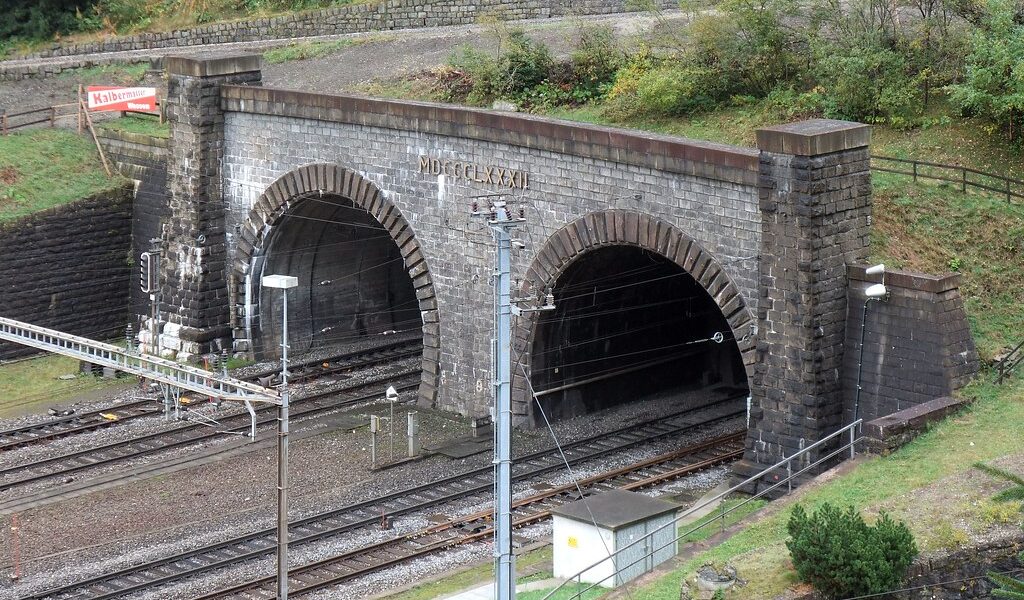
On a rainy Tuesday morning in a Hamburg S-Bahn terminus, a train arriving at platform 7 misjudged its stopping distance and contacted the track end stop at approximately 15 km/h. The hydraulic buffer mechanism absorbed the primary impact without injury to passengers or crew. The train was taken out of service for inspection. What the inspection team found in the subsequent examination of the vehicle’s lateral body buffers was more concerning than the track contact itself: the rubber elements in the vehicle-side buffers had not been inspected since the train entered service eleven years prior. Physical assessment confirmed the rubber had lost approximately 40% of its original elasticity — a compression set measurement well outside acceptable operational range. The units would not have performed to their rated energy absorption specification in a more significant contact event.
The incident was classified as a minor operational event. But it exposed a gap that appears in railway maintenance programs worldwide: rubber buffer elements in fixed track infrastructure and rolling stock applications receive far less systematic attention than the primary suspension and braking systems they complement. When the primary systems are working, no one thinks about the rubber buffers. When the primary systems reach the end of their capacity — in exactly the scenario they are designed for — the rubber buffers must perform. Whether they will depends entirely on whether they were inspected and replaced before that moment arrived.
This guide covers the full range of railway rubber buffer applications: track end-of-line buffer stops, vehicle body lateral buffers, bogie vertical bump stops, anti-climb buffers, and axle box vertical stops. For each, we address location, function, failure mode, inspection criteria, and replacement standards.
Browse Babacan Group’s railway rubber buffer range or contact our railway engineering team to discuss your specific application.
Where Railway Rubber Buffers Actually Appear
The term “railway rubber buffer” covers at least five distinct applications across track infrastructure and rolling stock. Each has different load profiles, different service life expectations, and different consequences of failure.
Track end-of-line buffer stops are the fixed or hydraulic absorbers installed at the end of terminus tracks, depot roads, and siding terminations. They protect track infrastructure and rolling stock from damage when trains over-run their stopping point.
Vehicle body lateral buffers appear on vehicles using traditional European screw coupling systems — freight wagons, some passenger coaching stock, and locomotives. They absorb longitudinal and lateral impact forces during coupling, train formation, and in-service buff and draft loads.
Bogie vertical end-stop buffers are the rubber bump stops built into bogie primary suspension systems. They limit the maximum compression travel of the primary suspension spring — whether coil spring, chevron spring, or rubber spring — before the bogie frame contacts a hard stop.
Anti-climb buffers are fitted to vehicle ends as a safety device. In low-speed collision scenarios where two vehicles make end-to-end contact, anti-climb geometry and rubber elements work together to prevent one vehicle from overriding the other.
Axle box vertical bump stops limit the travel of individual axle box assemblies within the bogie frame in extreme loading conditions or at the limits of primary suspension deflection.
Understanding which of these is relevant to your maintenance scope is the starting point for any rubber buffer inspection program.
Track Buffer Stops: Fixed, Friction, and Hydraulic Types
Fixed Buffer Stops
Fixed buffer stops are the simplest form: a steel or concrete end structure with rubber or polyurethane absorber pads mounted to the face. They are used on low-speed, low-traffic tracks — depot roads, maintenance facility sidings, and freight yard terminations where train arrival speeds are controlled to 5 km/h or below.
The rubber pads on fixed buffer stops are rated for a specific impact energy in kilojoules (kJ). A typical depot siding fixed buffer stop may be rated for 20 to 50 kJ. The pad dimensions, rubber compound specification, and energy rating must be documented in the track asset register. Replacement pads must match the original specification, not simply the physical dimensions.
Fixed buffer stop rubber pads are the most frequently neglected item in track infrastructure maintenance. They are inspected visually on routine track walks but rarely physically compressed or measured for elasticity loss. The compression set of aged rubber — the percentage of permanent deformation remaining after compressive load is removed — is the relevant performance parameter, but it requires physical measurement, not visual inspection. A pad that looks intact may have lost 35 to 50% of its energy absorption capacity through long-term compression set. Visual inspection alone will not catch this.
Physical inspection protocol for fixed buffer stop pads: measure pad height against installed height record. If height loss exceeds 10% of original, replace. If surface cracking exceeds 2 mm depth on more than 20% of the surface area, replace regardless of height.
Friction Buffer Stops
Friction buffer stops use a controlled-resistance sliding mechanism — the buffer stop assembly slides along the rail under impact, dissipating energy through friction. This mechanism handles the majority of the impact energy for higher-speed or higher-mass over-run events. Rubber secondary buffer elements sit at the end of the friction travel as a soft landing after the sliding mechanism has exhausted its stroke.
These rubber elements are not the primary energy absorber, but they must still perform to their specification. In a friction buffer stop that has been triggered (indicating the friction mechanism has engaged), the rubber secondary elements must be inspected and assessed for damage before the stop is returned to service.
Many railway infrastructure maintenance teams have a record of friction mechanism trigger events but no parallel record of rubber secondary buffer condition assessment at the time of reset. This is the gap that the Hamburg scenario described above belongs to.
Hydraulic Buffer Stops (Oleo Pneumatic, Knorr-Bremse, Hüffermann)
Hydraulic buffer stops are the standard installation at mainline terminus tracks, major passenger interchange points, and high-traffic freight terminations. The hydraulic mechanism — typically oleo-pneumatic, from manufacturers including Oleo International, Knorr-Bremse, and Hüffermann — handles impact energies from 200 kJ to over 1,000 kJ depending on the unit specification and the platform arrival speed limits.
The rubber elements in hydraulic buffer stops function as secondary absorbers after the hydraulic stroke has been completed. They provide the final soft deceleration and damp any rebound from the hydraulic mechanism. Replacement rubber elements are available from both the original hydraulic buffer stop manufacturer and from compatible aftermarket suppliers.
The hydraulic mechanism in these units has a defined service and overhaul program. The rubber secondary elements are typically not on the same service interval as the hydraulic seals and fluid — they may have a longer nominal life but still require periodic physical assessment rather than run-to-failure management.
Vehicle End Buffers: Screw Coupling Systems and EN 15551
Traditional European rolling stock uses a screw coupling system connecting vehicles. The buffer heads — the cylindrical faces that make contact between adjacent vehicles — contain rubber and/or hydraulic energy absorbing elements. The face geometry follows UIC 526 standards for interoperability across national rail networks.
EN 15551, the European standard for railway vehicle end buffers, defines performance requirements including force-displacement characteristics that buffer assemblies must meet for compliance. Buffer elements supplied for EN-compliant rolling stock must be tested and documented against these force-displacement requirements, not simply specified by rubber hardness.
The rubber elements within screw coupling buffer heads experience every buff and draft load event in service — every coupling in a marshalling yard, every in-service longitudinal force transmission, every emergency brake application. In freight wagon applications, this means substantial accumulated load cycles over a 30-year wagon life. Buffer rubber elements are consumable items with finite service life, not permanent structural components.
Natural rubber and nitrile rubber are both used in vehicle buffer applications, with compound selection driven by the operating temperature range and resistance to oil contamination (relevant in freight applications where wagon contents may leak). Natural rubber offers superior elastic recovery at moderate temperatures; nitrile offers better oil resistance.
The shore hardness specification for vehicle end buffer elements is typically Shore A 55 to 70 for passenger vehicle applications and Shore A 65 to 75 for freight wagon applications, reflecting the higher average load levels in freight service.
Bogie Vertical Bump Stops: Function and Failure
Every railway bogie incorporates some form of primary suspension vertical travel limit. The bump stop is the rubber element that makes contact when the primary suspension reaches its maximum compression travel — typically under emergency braking, negotiating a severe track irregularity, or under asymmetric load distribution.
The bump stop must be soft enough to absorb the transition to hard contact smoothly — an abrupt hard stop at the end of primary suspension travel would impose very high shock loads on both the bogie frame and the vehicle body. It must be hard enough to actually limit the travel within the designed geometry — a bump stop that fully compresses before limiting travel has failed its function. The Shore A specification for bogie bump stops is typically 70 to 80.
Bump stop wear assessment requires measuring installed height against the original specification. Height loss indicates compression set and creep — the rubber has permanently deformed under sustained loading. When height loss exceeds 15% of original installed height, replace the bump stop.
In practice, bump stops are often replaced at bogie overhaul intervals because accessing them requires bogie removal or at least bogie pit access. The risk is that bogie overhaul intervals are typically 7 to 10 years, and bump stop compression set can reach critical levels before the scheduled overhaul, particularly in high-mileage or high-load applications.
Chevron springs used in many bogie primary suspension systems have integrated bump stop geometry in some designs. For a detailed treatment of chevron spring suspension, see our chevron springs and railway bogie suspension guide. For the full context of bogie suspension rubber components, our railway bogie spare parts range covers both primary and secondary suspension items.
Mini-Story: Netherlands Freight Terminal — The Quiet Failure
A Netherlands-based intermodal freight terminal operates a network of buffer stops across 14 classification tracks. The terminal’s maintenance program included annual visual inspection of all buffer stops, with replacement triggered by visible rubber cracking or displacement.
Following a rail network safety audit in 2023, the terminal was asked to provide physical measurement records for buffer stop rubber elements — specifically compression set and height loss data. The records did not exist. Physical measurement was initiated as part of the audit response.
Of the 14 hydraulic buffer stops, 12 had rubber secondary elements in acceptable condition. Two had rubber elements with measured height loss of 28% and 31% respectively — well above the 15% replacement threshold. Both were at tracks handling heavy intermodal wagon sets with above-average approach masses. Visual inspection had not identified either unit as requiring replacement.
Proactive replacement was completed on both units. The terminal subsequently implemented a physical measurement program on a 24-month cycle, replacing visual inspection as the primary assessment method for rubber buffer elements.
Operating Temperature: Cold Climate and Desert Applications
Railway rubber buffers operate across the full range of climates where rail infrastructure exists — from -40°C in northern Norway, Finland, Canada, and Russia to surface temperatures exceeding +60°C on summer days in the Middle East, North Africa, and Australia.
Standard rubber compounds perform acceptably within approximately -30°C to +80°C, but at the extremes of this range, performance degrades. Below -30°C, most standard NBR and NR compounds approach their glass transition temperature and begin to lose elasticity. Above +70°C continuous exposure, compound degradation accelerates and energy absorption performance declines.
Cold-climate markets — Scandinavian railways, Canadian transit systems, Russian Railways — require buffer elements specified with cold-rated compounds that maintain elasticity at -40°C or below. Heat-resistant compounds are required for Middle Eastern and Australian applications where buffer elements in direct sun exposure can reach 65°C or above continuously.
The Australian heavy haul example illustrates the consequence of getting this wrong. At an iron ore railway in the Pilbara region of Western Australia, axle box bump stops on loaded iron ore wagons were failing at 18 months of service. Summer surface temperatures on the wagon chassis regularly reached 65°C. The compound specified was a standard Shore A 75 natural rubber — not heat-rated for continuous elevated temperatures. After switching to a heat-resistant compound with equivalent hardness and energy absorption characteristics, service life extended to 36 months with no premature failures recorded.
EN 45545-2 and Fire Performance in Enclosed Applications
Buffer elements used inside vehicle bodies or in tunnel applications may be subject to fire performance requirements under EN 45545-2, the European railway fire protection standard. This most commonly applies to bogie internal bump stops and axle box bump stops in metro and underground railway applications.
For applications where EN 45545-2 compliance is required, the rubber compound must be qualified against the appropriate hazard level requirements. Standard industrial rubber compounds are typically not compliant. For a detailed treatment of EN 45545-2 requirements for railway rubber components, see our dedicated EN 45545-2 railway rubber fire compliance guide and our EN 45545-2 compliant products page.
Inspection Programs: What Good Looks Like
A robust railway rubber buffer inspection program combines visual inspection with physical measurement and records both against a documented baseline. Key elements:
Baseline documentation: Record the installed height, hardness, and energy rating of every rubber buffer element at installation. Without a baseline, height loss cannot be calculated from field measurement.
Visual inspection triggers: Surface cracking exceeding 2 mm depth; visible bond separation between rubber and metal; permanent lateral displacement; evidence of contamination with hydraulic fluid or fuel oil (both degrade rubber compounds).
Physical measurement criteria: Height loss exceeding 10% of baseline for fixed buffer stop pads; height loss exceeding 15% for bogie bump stops and vehicle buffer elements. Compression set measurement for suspected long-term static load exposure.
Environmental records: Note operating temperature range and any contamination exposure history. These factors determine whether standard compound specifications are appropriate.
Post-incident inspection: Any buffer stop that has engaged — track end buffer contact, vehicle buffer coupling at speed — must be physically assessed before return to service, not just visually cleared.
Babacan Group Railway Rubber Buffer Products
Babacan Group manufactures rubber buffer elements for track buffer stop applications and railway vehicle use across the full range of infrastructure and rolling stock applications. Our railway rubber range includes cold-rated compounds for Scandinavian and North American markets, heat-resistant compounds for Middle Eastern and Australian operations, and EN 45545-2 compliant grades for metro and underground applications.
Founded in 1986 and certified to ISO 9001:2015, we supply railway operators and infrastructure managers in 84+ countries. Our 90,000+ reference catalogue spans fixed buffer stop pads, hydraulic buffer stop secondary elements, vehicle end buffer inserts, bogie bump stops, and axle box vertical stop elements.
For a complete view of our railway product range, visit our railway systems page and our primary suspension components catalogue. Technical data sheets and compound specifications are available on request.
Request a technical quote with your application details — operating temperature range, energy rating requirement, EN 15551 or EN 45545-2 compliance requirements, and current OEM or drawing reference if available. Our railway engineering team will confirm compatible specifications within two business days.
Key Takeaways
- Railway rubber buffers appear in at least five distinct applications — track end stops, vehicle body buffers, bogie bump stops, anti-climb buffers, and axle box stops — and each has different inspection criteria, replacement intervals, and failure consequences.
- Visual inspection alone is insufficient for rubber buffer assessment: compression set causes significant loss of energy absorption capacity without obvious visual degradation, and physical height measurement against a documented baseline is required.
- Fixed track buffer stop rubber pads and hydraulic buffer stop secondary elements are among the most neglected items in railway infrastructure maintenance, yet they must perform to specification in exactly the emergency scenarios for which all other systems are also operating at their limits.
- Cold-climate and high-temperature applications both require compound-specific selection — standard NBR and NR compounds lose performance at the temperature extremes present in northern European, Canadian, Middle Eastern, and Australian railway environments.
- EN 45545-2 fire performance compliance applies to rubber buffer elements in vehicle interior and tunnel applications — standard industrial compounds are not compliant and must be replaced with qualified grades for metro and underground projects.
Word Count: ~2,480 words