
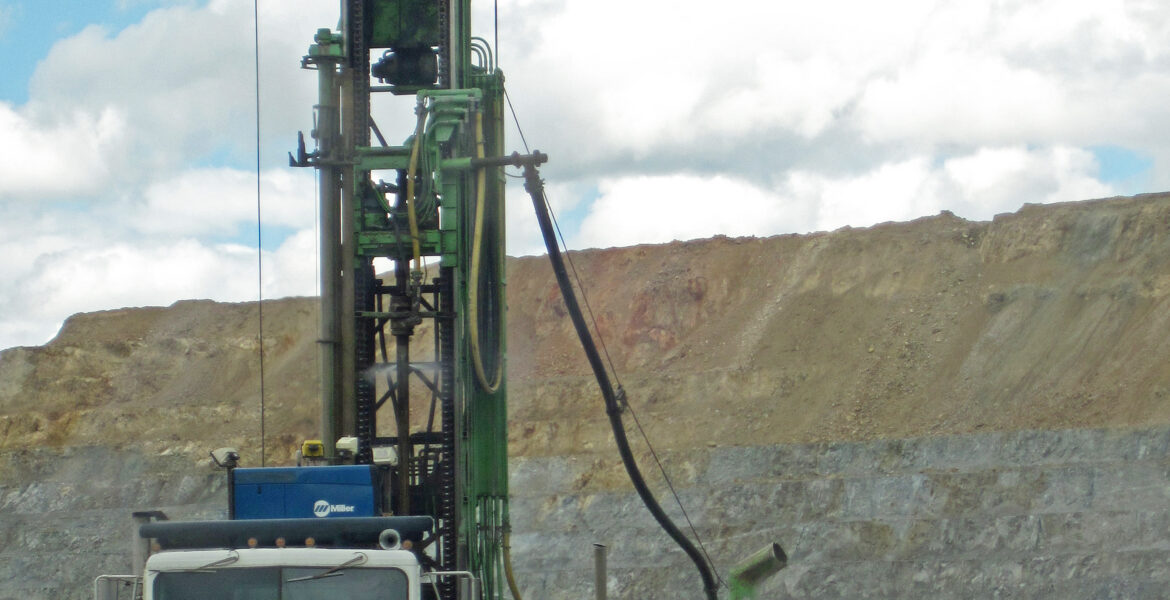
Here is a mistake that costs mining operations thousands of dollars every year: a procurement manager orders rubber coupling elements for a fleet of surface drill rigs. Half the rigs are Sandvik DI550s. Half are Epiroc SmartROC T40s. The order comes in, the parts go on the shelf, and a technician grabs the wrong coupling for the wrong machine. The dimensions look close enough. They install it. The coupling fails at 800 hours instead of 3,000 — and the failure takes out a pump drive shaft in the process.
This is not a hypothetical. The confusion between Sandvik and Epiroc parts is one of the most common sourcing errors in the surface and underground drilling sector today, and it has a specific historical cause that every procurement and maintenance professional in this industry needs to understand.
This guide covers the complete rubber parts picture for both brands — engine mounts, compressor drive couplings, isolation mounts, and underground drill-specific components — along with the compound requirements for extreme environments and a clear explanation of how these two companies became two separate brands with non-interchangeable parts.
Request specifications and pricing for Sandvik or Epiroc drill rubber parts from Babacan Group.
The 2018 Split: Why Sandvik and Epiroc Are Not the Same Company
Before sourcing a single rubber part for a rock drill rig, every technician and buyer needs to understand this history. It directly determines which part number applies to which machine.
Atlas Copco was, for decades, the dominant Swedish manufacturer of rock drilling equipment. Sandvik Mining and Rock Technology was a competing Swedish manufacturer with its own drill rig product line — the DI series for surface drilling and the DD series for underground development. These were always separate companies with separate, non-interchangeable parts.
In 2018, Atlas Copco made the strategic decision to spin off its mining and rock drilling equipment business as a standalone publicly traded company. That new company was named Epiroc. Atlas Copco retained its industrial tools and compressor businesses. Epiroc took the legacy Atlas Copco rock drill product lines: the ROC D series surface rigs, the FlexiROC series, the SmartROC series, and the underground COP and Boomer series.
Sandvik retained its own drill rig business — the DI series, the DR series, and the DD series — and continues to develop and sell these products under the Sandvik brand independently of Epiroc.
The result today: Epiroc manufactures and sells what was formerly the Atlas Copco rock drill product range. Sandvik manufactures and sells the Sandvik product range. The two companies are both headquartered in Sweden, are both major global suppliers, and are direct competitors. Their rubber parts are not interchangeable. Their part number systems are entirely separate. Ordering “Atlas Copco ROC D7 coupling element” and applying it to a Sandvik DI650 is an engineering error, not a valid substitution.
When cross-referencing obsolete part numbers — particularly for pre-2018 equipment — always confirm which brand the machine was built under and obtain the serial number before placing an order. Do not rely on catalog dimensions alone for coupling elements. A 0.5 mm dimensional difference in a star coupling element can change the load distribution profile entirely.
Sandvik DI Series: Surface Drill Rig Rubber Components
Engine Mounts
The Sandvik DI550 and DI650 are large crawler-mounted surface drill rigs used in open-pit mining and quarry production drilling. Both rigs are typically powered by Caterpillar or Volvo Penta diesel engines, depending on the configuration year and customer specification. This engine source variation is directly relevant to rubber parts sourcing.
The engine mounts on a DI550 with a CAT C15 engine use mount specifications derived from the CAT industrial mount standard — the inner bore diameter, bonded plate dimensions, and compound hardness follow CAT specifications. The same DI550 configured with a Volvo Penta D16 engine uses Volvo Penta-derived mount specifications with different outer dimensions and a slightly different compound hardness in the primary mount body.
This is not a trivial difference. An engine mount that is 2 mm undersized in the outer diameter will not achieve full face contact with the mounting bracket, reducing the effective load-bearing area and increasing local stress on the rubber. Under the vibration loads of a production drilling rig — which operates the drill rotation and feed while the carrier engine is running — this translates to premature fatigue cracking.
Always identify the engine model from the machine serial record before ordering DI series engine mounts. Do not rely on visual inspection alone.
Compressor Drive Couplings: The Primary Wear Item
The compressor drive coupling is the single highest-wear rubber component on a Sandvik DI series surface drill rig. The DI550 and DI650 use an onboard air compressor to power the DTH (down-the-hole) hammer or rotary drill bit flushing air. This compressor is driven directly from the engine via a flexible coupling element.
The compressor drive coupling on a DI series rig absorbs torsional shock from compressor pressure pulsations — the compressor is a reciprocating or screw type, and each compression stroke produces a torque spike at the drive coupling. In production drilling, the rig may run its compressor for 8–12 hours per shift. The coupling element accumulates fatigue cycles rapidly.
Typical service life for a DI550 compressor coupling element under continuous production conditions is 2,500–4,000 hours, depending on compound quality and whether the coupling was correctly shimmed at installation. Misalignment remains the primary cause of premature failure — even 0.3 mm of angular misalignment creates a rotating bending cycle in the coupling body that multiplies fatigue damage.
Sandvik specifies coupling elements in Shore 90–95A natural rubber for standard ambient temperature conditions and in nitrile rubber compound for applications where hydraulic fluid mist or fuel contact is likely.
Drill Control System Vibration Isolation Mounts
The Sandvik DI series uses electronic drill control systems with sensors, valves, and processing units that must be isolated from the high-frequency vibration generated by the percussion drilling process. The drill control panel and key electronic assemblies are mounted on rubber isolation pads — typically sandwich-type mounts with a Shore 45–55A natural rubber body — designed to attenuate frequencies above 15 Hz.
These mounts are often overlooked during maintenance planning because they do not contribute to any visible mechanical symptom when they fail. A failed control system isolation mount does not cause a noise or a performance loss that the operator notices immediately. But the vibration transmitted to the electronics shortens sensor service life and causes intermittent connection failures in the control harness — faults that appear as random electronic errors and are difficult to diagnose without knowing the mount condition.
Sandvik DR580: Rotary Blasthole Rubber Components
The Sandvik DR580 is a large rotary blasthole drill rig used for large-diameter production holes in open-pit mining. It uses a different drive architecture from the DTH-based DI series — the DR580 rotates the drill string directly rather than using a percussion hammer, so the torque and vibration profiles are different.
Engine mounts on the DR580 are typically specified to a higher static load rating than DI series mounts due to the larger engine displacement required for rotary drilling at large diameter. The DR580’s mast vibration isolation mounts — the rubber elements between the mast assembly and the crawler carrier — are particularly important because the mast carries the full rotary drive and kelly bar assembly, which is substantially heavier than a DTH hammer.
For current compound specifications and cross-reference data for the DR580, consult the Babacan Group product catalog or contact the technical team directly.
Sandvik DD Series Underground Drills: Different Environment, Shorter Intervals
Roberto Escobar manages maintenance for an underground development drill fleet at a copper mine in northern Chile. The fleet includes four Sandvik DD210s for face drilling and two DD320s for longer development rounds. His above-ground surface drill fleet averages 4,000 hours between major rubber component replacements. Underground, his intervals are closer to 2,500 hours for the same component categories. The difference is the environment.
Underground drilling environments impose conditions that do not exist on surface rigs. Temperature in deep mine workings can reach 30–45°C ambient — not accounting for heat generated by the machine itself. Humidity is typically 85–100% relative humidity due to water used for drill dust suppression and mine dewatering. This combination accelerates rubber oxidation and hydrolysis significantly compared to surface conditions.
The Sandvik DD210 and DD320 are hydraulic face drilling rigs designed for underground development and production drilling. Their carrier isolation mounts — the rubber elements between the hydraulic rock drill and the carrier boom — operate in continuous vibration environments that are arguably more severe than surface drill rigs because the confined underground space reflects acoustic and vibration energy back onto the machine.
For DD series underground rigs, Babacan Group recommends 20–25% shorter inspection intervals compared to surface drill specifications. Visual inspection of carrier isolation mounts at 1,500-hour intervals minimum, with replacement at first sign of rubber fatigue cracking regardless of remaining apparent elasticity.
For related guidance on high-vibration rubber mount applications, the mining equipment vibration isolation guide provides relevant context on compound selection under continuous vibration loading.
Epiroc SmartROC Series: Updated Specs That Don’t Match Legacy ROC D Catalogs
The Epiroc SmartROC T35, T40, and T45 are the current-generation top-hammer surface drill rigs from Epiroc — the direct successors to the legacy Atlas Copco ROC D series. The SmartROC platform was introduced with a substantially revised hydraulic and mechanical architecture compared to the ROC D series.
This has a direct and important consequence for rubber parts sourcing: SmartROC rubber component specifications are different from ROC D specifications in several key areas, and the old ROC D catalog should not be used as a reference for SmartROC parts without serial number confirmation.
The SmartROC T40 compressor drive coupling uses a different spider element geometry from the legacy ROC D7 coupling. The spider arm count is the same, but the arm cross-section profile is revised for higher torque capacity. Installing a ROC D7 element in a SmartROC T40 drive will result in uneven load distribution across the spider arms and premature failure at the arm roots.
The SmartROC T35 and T45 engine mounts have been revised to accommodate the updated engine package — the SmartROC series is available with Tier 4 Final / Stage V compliant engines that have different mounting geometry from the older Tier 3 engines used in the ROC D series.
If you are sourcing parts for a machine that transitioned from Atlas Copco to Epiroc production — meaning the machine was manufactured between 2017 and 2019, during the corporate transition period — always obtain the complete serial number and confirm the exact production specification with Babacan Group before ordering.
Rubber Compound Requirements for High-Temperature Underground Environments
Standard natural rubber compounds are rated for continuous operation to approximately 70°C. In a deep underground mine with 40°C ambient temperature and a hydraulic rock drill generating radiant heat, the temperature at the drill carrier isolation mounts can reach 80–90°C during sustained drilling. At these temperatures, standard natural rubber begins to undergo accelerated oxidation — the rubber stiffens, loses elasticity, and develops surface cracking within 1,000–1,500 hours.
For underground drill applications in hot mine environments, rubber compounds must be specified for continuous service above 80°C. Options include high-temperature natural rubber formulations, ethylene-propylene-diene monomer (EPDM) compounds for non-oil-contact applications, and nitrile rubber for components where hydraulic fluid contact is likely.
The compressor drive coupling on underground drill rigs does not typically see hydraulic fluid contact, so natural rubber high-temperature compound is usually appropriate. The carrier isolation mounts on the hydraulic rock drill section may see hydraulic oil mist, which rules out standard natural rubber and requires nitrile or EPDM specification.
Babacan Group’s technical team can advise on compound selection based on the specific mine temperature profile and drilling configuration. Contact the team with the machine model, serial number, and mine ambient temperature data for a compound recommendation.
Cross-Referencing and Obsolete Part Numbers
Both Sandvik and Epiroc maintain historical part catalogs for older drill rig models, but OEM supply for discontinued models can involve long lead times — 8–16 weeks for some older Sandvik DI series and legacy ROC D components — and significant price premiums.
The cross-referencing process for obsolete part numbers requires three data points: the OEM part number from the machine’s original parts book, the dimensional specification (inner diameter, outer diameter, length/height, compound hardness), and the application context (is this a torsional coupling, an isolation mount, or a vibration pad?). Dimensional matching alone is insufficient — a coupling element that is dimensionally identical but specified in a softer compound will fail faster in a high-torque application even if it installs correctly.
For the Atlas Copco drill rubber parts guide covering legacy Atlas Copco-branded rock drill equipment, Babacan Group maintains cross-reference data linking historical Atlas Copco OEM numbers to current Epiroc specifications. For hydraulic breaker rubber parts that are often used in conjunction with drill rigs on combined excavation/drilling projects, separate reference data is available.
For Furukawa rock drill rubber parts, note that Furukawa uses entirely different compound specifications from both Sandvik and Epiroc — cross-referencing between brands is not valid for coupling elements regardless of dimensional similarity.
Browse the full Babacan Group rubber parts product range for mining equipment.
Building a Maintenance Stock Strategy for Mixed Drill Fleets
Angela Morris runs procurement for a contract mining company that operates 22 drill rigs across four mine sites in Western Australia. Her fleet includes a mixture of Sandvik DI550s, Epiroc SmartROC T40s, and a handful of legacy ROC D9s that are still running on long-term contracts. She manages three separate part number streams for coupling elements alone.
Her approach: maintain minimum two units of each coupling element type for each rig model on site. The minimum stock is based on mean time between replacements — if the average coupling life is 3,000 hours and she has four DI550s accumulating 2,000 hours per year each, she needs to replace approximately 2.7 couplings per year across those four machines. Minimum stock of two means she can handle one unplanned failure plus one scheduled replacement before the next order arrives.
For rubber mounts with longer service lives — engine mounts at 6,000–8,000 hours — she maintains one unit per rig model as emergency stock and relies on a 2-week lead time from Babacan Group for scheduled replacements. This approach balances warehouse cost against downtime risk.
Babacan Group holds ISO 9001:2015 certification for quality management across its manufacturing processes, ensuring consistent dimensional and compound specification compliance across production batches — critical for maintaining cross-shipment part consistency in fleet maintenance programs.
Key Takeaways
- Sandvik and Epiroc are entirely separate companies with non-interchangeable parts — the 2018 Epiroc spin-off from Atlas Copco is the source of persistent confusion that causes costly sourcing errors.
- The compressor drive coupling is the primary wear item on both Sandvik DI series and Epiroc SmartROC surface drill rigs, with typical service life of 2,500–4,000 hours under production conditions.
- SmartROC coupling and mount specifications differ from legacy ROC D specifications — never cross-reference from old ROC D catalogs to SmartROC applications without serial number confirmation.
- Underground drill environments (high temperature, high humidity) require compound specification upgrades — standard natural rubber service life is reduced by 30–40% in hot underground mine conditions.
- When sourcing for obsolete models, dimensional matching alone is insufficient — compound hardness and application context must be confirmed before substitution.
Word Count: ~2,380 words