
A construction site manager in County Kildare, Ireland, noticed something wrong with the company’s JLG 4013 during a routine concrete block lift at full extension. The 800 kg pallet was swaying 15–20 cm side-to-side even with the machine parked stationary on level ground, outriggers deployed, engine at idle. The operator had been compensating for the instability by working more slowly and keeping loads below rated capacity. A maintenance engineer brought in to investigate found the cause in 10 minutes with a dial gauge: the main boom pivot bushing clearance had grown from the factory specification of 0.1 mm to 1.8 mm after 4,200 working hours. That 1.7 mm of additional play, amplified by the 13-metre boom at full extension, produced the visible load sway that had been reducing site productivity for months. The fix — a replacement bushing set — cost £240 and took 3 hours to fit.
Telescopic handlers are among the most versatile machines on modern construction and agricultural sites. They lift, place, carry, and serve as working platforms in applications where no other machine type would be as efficient. That versatility comes from a complex combination of hydraulics, articulating structures, and rubber components that absorb shock, isolate vibration, and maintain dimensional precision in pivoting joints. When those rubber components wear, precision degrades long before any visible structural damage appears.
This guide covers every critical rubber component on a telescopic handler — from boom pivot bushings to axle oscillation pivots — with replacement intervals, wear indicators, and brand-specific notes for the major manufacturers.
Sourcing replacement rubber parts for your telehandler fleet? Request a quote from Babacan Group — 90,000+ references, ISO 9001:2015 certified, 84+ countries supplied.
The Telehandler Market: Major Brands and Their Machines
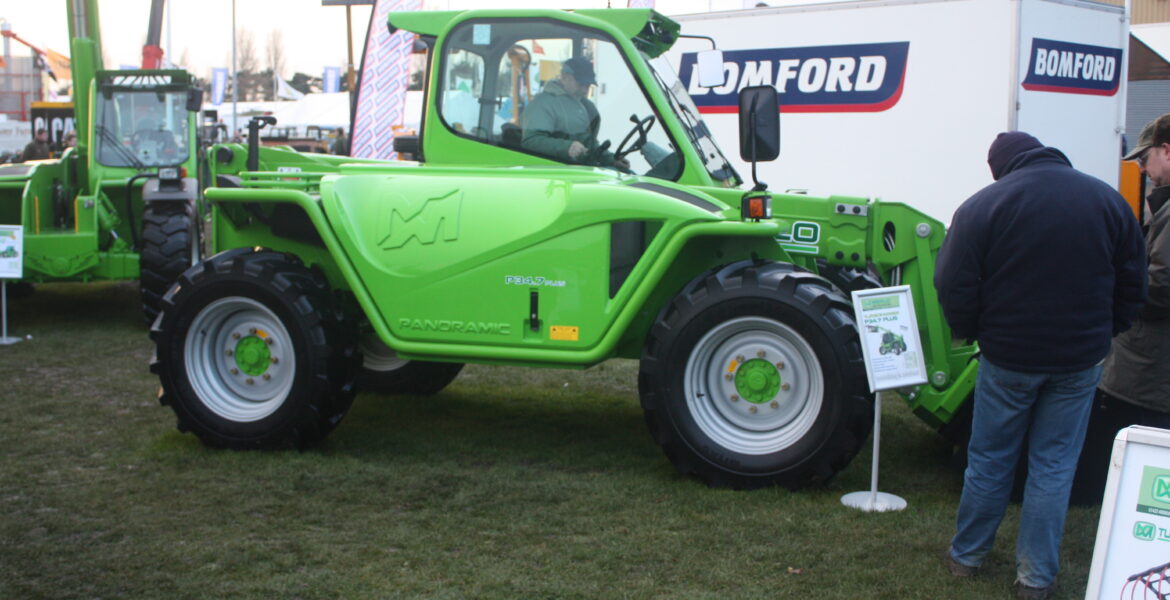
The telescopic handler market has grown substantially since the late 1990s. JCB’s Loadall range pioneered the mass-market telehandler and remains the global volume leader, with models from the compact 520-40 to the high-capacity 550-80. Manitou (France) builds a comprehensive range including the MRT rotating telehandler series. JLG (USA, now part of Oshkosh) produces the 4013, 4017CX, and 1255 among many other models. Merlo (Italy) specialises in high-specification agricultural and construction telehandlers including the P72.10 and TF42.7. Bobcat Telehandlers (previously part of Doosan), DIECI (Italy), and Faresin (Italy) cover other significant market segments.
Each brand uses broadly similar architecture — a longitudinal frame, rear-mounted engine, forward-mounted telescoping boom, and a counterweight at the rear — but the specific rubber components vary significantly by model generation, application, and market. This guide focuses on the components that are common across all brands, with brand-specific notes where relevant.
For operators who also run JCB backhoe loaders or wheeled equipment, our JCB rubber mounts and spare parts guide covers related components across the JCB product line.
Engine Mounts: Small Bay, Short Thermal Cycles
Most telehandlers in the 3–5 tonne lifting capacity range use Deutz TCD series, Perkins 1104D or 1106D, or JCB DieselMax engines in the 75–120 kW bracket. Larger models (JLG 1255, Manitou MRT 3255, Merlo TF50.8) use Deutz TCD 6.1 or equivalent engines producing 130–170 kW.
The engine bay geometry of a typical telehandler is more constrained than that of an equivalent excavator or wheel loader. The engine sits close to the counterweight and the boom pivot structure, with limited clearance on all four sides. This creates a thermal environment that is more severe than open-engine-bay machines of equivalent power output — heat builds up between services rather than dissipating to free air.
The consequence for engine mounts is accelerated thermal cycling degradation. Where a rubber engine mount on an open-frame excavator might see 40–50°C peak temperature, the same rubber compound in a telehandler engine bay will regularly reach 65–75°C in ambient temperatures above 25°C. The thermal cycling between cold starts and operating temperature causes progressive fatigue in the rubber element — typically manifesting as surface cracking at the mount corners within 2,500–3,000 hours in hot-climate applications.
Standard 4-point mounting arrangements apply to most telehandler engines. Inspect at every 500-hour service for surface cracking and height loss. Replace at any sign of rubber-to-metal separation or when height has dropped by more than 3 mm from the original installation dimension.
Boom Pivot Bushings: The Most Critical Wear Item
The telescoping boom on a telehandler is attached to the chassis at the main boom pivot — a large-diameter pin-and-bushing joint that carries the entire dynamic load of the boom, attachment, and load at every possible angle of elevation and extension. This is the single most structurally critical rubber (or rubber-lined polymer) component on the machine.
Main Boom Pivot Bushing
The main boom pivot diameter varies by manufacturer and model class but typically falls between 80 mm and 150 mm on machines in the 3–6 tonne capacity range. JLG uses a rubber-lined pivot design on several models; Manitou uses a greaseable polymer bushing on the MRT series; Merlo uses composite bushings with rubber damping elements on several agricultural models.
Regardless of design type, the pivot carries the full rated load of the machine — plus dynamic multipliers from acceleration, braking, and uneven ground travel. At full extension, the lever arm from the pivot to the forks is at its maximum, meaning that even a small angular play in the pivot produces large tip deflection. The 0.1 mm-to-1.8 mm example from the opening of this article is not exceptional — it is a predictable outcome when pivot bushing inspection is absent from the maintenance schedule.
Service life for main boom pivot bushings typically falls between 3,000 and 5,000 hours depending on application severity. Agricultural telehandlers used for silage and hay bale handling — where the machine operates continuously at high cycle rates during short seasonal windows — wear pivot bushings significantly faster than construction site machines doing 5–10 lifts per hour. A farm telehandler during a 6-week silage season may do more pivot cycles in that period than a construction telehandler does in a full year.
Inspection method: Apply a dial gauge to the boom side plate adjacent to the pivot pin, with the gauge in the vertical axis. Apply a small vertical load with the bucket tilt cylinder and measure deflection. Values above 0.5 mm warrant immediate attention; values above 1.0 mm require scheduled replacement within the next 250 hours.
Inner Boom Section and Carriage Tilt Pivots
On knuckle-boom telehandler models (Manitou MRT rotating series, several Merlo models), additional pivot joints at the knuckle add further bushing wear points. These joints operate at smaller diameters but often at higher cycle rates than the main pivot.
The carriage tilt pivot — connecting the boom head to the fork carriage or attachment mount — cycles with every load approach and placement. Clearance build-up here does not create the dramatic tip deflection of a worn main pivot, but it creates attachment misalignment that can damage hydraulic quick-coupler seals and cause fork carriage drop under load. Replace at 2,000-hour intervals in high-cycle construction and logistics applications.
Cab Isolation: Operator Comfort and Legal Compliance
Modern full-cab telehandlers use 6-point or 8-point cab isolation systems to attenuate structure-borne vibration before it reaches the operator. The EU Directive 2002/44/EC on whole-body vibration sets daily vibration exposure action values at 0.5 m/s² and limit values at 1.15 m/s² for operators in EU member states.
This regulation applies directly to telehandlers used in agriculture, where long daily operating hours during planting and harvest seasons are common. An agricultural telehandler operator working 10 hours per day during harvest on a machine with worn cab mounts may exceed the EU action value even if the same machine with new cab mounts would be compliant. Employers in EU agricultural operations have a legal obligation to assess and manage WBV exposure — and cab mount condition is a primary variable.
On open-station models common in construction applications, vibration reaches the operator more directly through the seat suspension, steering wheel, and floor. The whole-body vibration risks for open-station operators are generally higher than for full-cab operators with functional isolation.
Cab mounts on full-cab telehandlers should be inspected at every 1,000-hour service and replaced at the first sign of visible cracking or height loss exceeding 5 mm. The replacement cost is modest (typically £150–300 in parts) compared to the cost of regulatory non-compliance or an operator health claim. Our construction machinery suspension parts guide has a broader discussion of suspension component maintenance principles relevant to all site machines.
Mini-Story: French Viticulture Estate
A wine estate in the Languedoc region of southern France operates a Merlo P65.9 telehandler year-round, handling bulk grape bins during harvest and fertiliser bags for the rest of the year. After three seasons of operation and approximately 4,400 hours, the estate manager noticed that front tire wear had become dramatically uneven — the inner edge of both front tires was wearing significantly faster than the outer edge. Two replacement sets of front tires had been purchased in 18 months at a total cost of approximately €2,200.
A Merlo dealer service technician identified the real cause: the rear axle oscillation pivot bushings had worn to 2.4 mm clearance against an original specification of 0.2 mm. The worn bushings were allowing the rear axle to tilt asymmetrically under load, transferring unbalanced weight to the front axle and causing the uneven wear pattern. Replacing the axle oscillation bushings — a parts cost of €340 — eliminated the wear pattern entirely. The estate manager calculated that the missed bushing inspection had cost approximately €1,860 in unnecessary tire expenditure before the actual cause was identified.
Stabilizer Leg Bushings: High-Cycle Wear in Logistics and Events
Telehandlers used in logistics and events applications deploy their stabilizer legs many more times per shift than construction site machines. A telehandler working in an events rigging context might extend and retract stabilizers 40–60 times per day. At that cycle rate, stabilizer leg pivot bushings reach the equivalent of a construction site machine’s 2-year bushing wear in approximately 4–6 months.
Stabilizer bushing wear creates a gradual reduction in the rigidity of the deployed stabilizer position. On a machine working at maximum rated height with a load, this instability is not merely a comfort issue — it is a tip-over risk. Stabilizers that do not lock positively in the deployed position because of worn pivot bushings can allow incremental movement under dynamic load.
For events and logistics telehandler fleets, stabilizer leg bushing replacement at 1,500 hours regardless of measured wear condition is a defensible preventive maintenance position. The cost of a bushing set is trivial against the cost of an incident investigation or insurance claim.
Axle Oscillation Bushings: The Terrain-Following Joint
Many telehandler models use a rear oscillating axle to maintain four-wheel ground contact on uneven terrain. The axle pivot carries the full rear-axle load (machine weight plus load sharing from the counterweight and engine) and oscillates continuously during cross-slope travel and rough-ground traversing.
Because the pivot load is continuous rather than cyclic (unlike a boom pivot, the axle pivot is always carrying load), creep and compression set are the primary failure modes. Compression set in the rubber elements of an axle oscillation bushing allows the bushing to drift from its neutral position, eventually limiting the available articulation range and causing the instability effects described in the Merlo case above.
NBR is the most common compound for axle oscillation bushings due to the hydrocarbon contamination environment near the axle drive components. Check oscillation bushing condition at every 1,000-hour service by measuring the available angular travel range and comparing it to the OEM specification. A reduction of more than 20% in available travel angle indicates bushing wear that warrants replacement.
Hydraulic Drive Coupling
Several telehandler models — primarily older Manitou and JLG fixed-mast models — use a hydrostatic transmission in which the engine drives a hydraulic pump through a flexible rubber coupling rather than a mechanical gearbox. This coupling is a primary wear item because it handles the full engine torque output continuously and must accommodate small angular misalignments between the engine output shaft and the hydraulic pump input.
Rubber coupling wear in hydrostatic transmission telehandlers typically manifests as increasing vibration at idle (the coupling can no longer absorb engine firing irregularity), followed by audible clattering at engine start as the rubber elements move within their metal spiders. Once clattering is audible, replacement is urgent — continued operation risks full rubber element failure and sudden loss of drive.
For a comprehensive treatment of rubber coupling design and replacement principles, see our rubber couplings for power transmission guide.
Mini-Story: Events Rigging Company Fleet Standardization
A UK-based events rigging company operates 6 JLG telehandlers (three 4013s and three 3513s) supporting stage and structure builds across festival and arena venues. The machines work intensively for 3–5 day periods followed by transport to the next site, and they routinely operate on soft ground in agricultural showground settings.
After experiencing two boom pivot bushing failures in 18 months — one requiring an unscheduled service call on-site at a cost of £1,800 including travel and overtime — the fleet manager adopted a fixed replacement schedule: all boom pivot and stabilizer leg bushings replaced at 1,500 hours regardless of measured clearance. The parts cost across all 6 machines is approximately £2,800 per replacement cycle. The fleet manager calculated that this preventive spend eliminates the risk of the £8,000–15,000 cost (parts, labour, site downtime, and replacement machine hire) that a bushing failure in the middle of an event setup would generate.
The maintenance engineer uses Babacan Group replacement bushings across the JLG fleet, citing consistent dimensional accuracy and the availability of material data sheets for inclusion in their maintenance records.
OEM vs. Aftermarket Rubber Parts for Telehandlers
OEM bushing specifications from JLG, Manitou, and Merlo are generally well-documented in service manuals — dimensions, materials, and installation torques are clearly specified. The question for fleet managers is whether the OEM part or a quality aftermarket part is the better supply chain choice.
OEM parts from telehandler dealers typically carry a 30–60% price premium over quality aftermarket equivalents. For high-consumption items like boom pivot bushings and cab mounts, this premium adds up across a multi-machine fleet. Quality aftermarket parts from ISO-certified manufacturers with traceable material specifications represent a sound alternative for most rubber components.
The critical requirement when using aftermarket rubber parts is dimensional conformance: the replacement bushing must match the OEM bore diameter, outer diameter, and length to within the tolerances specified in the service manual. A bushing that is even 0.2 mm oversize on the outer diameter will require pressing force that damages the housing bore. For a full analysis of OEM versus aftermarket selection criteria, see our OEM vs aftermarket rubber parts guide.
Explore the full range of rubber mounts from Babacan Group, covering replacement components for all major telehandler brands. Or visit the Babacan Group shop for standard catalogue items available for immediate dispatch.
Ready to standardize your telehandler rubber parts supply? Contact Babacan Group to discuss fleet supply arrangements and volume pricing.
Key Takeaways
- Boom pivot bushing wear is the primary rubber-related maintenance issue on telescopic handlers — a clearance increase from 0.1 mm to 1.8 mm creates visible load sway at full extension that reduces site productivity and operator confidence.
- Agricultural telehandlers wear boom pivot and axle oscillation bushings significantly faster than construction site machines due to continuous high-cycle loading during seasonal operations.
- EU Directive 2002/44/EC on whole-body vibration applies to telehandler operators working more than 6 hours daily — cab mount condition directly affects regulatory compliance status.
- Worn axle oscillation bushings cause uneven tire wear that can cost far more in replaced tires than the bushing replacement itself, making it a classic hidden failure mode.
- Fixed-interval bushing replacement (1,500–2,000 hours in high-cycle applications) provides better total cost of ownership than condition-based replacement for events, logistics, and agricultural fleets.
Word Count: ~2,400 words