
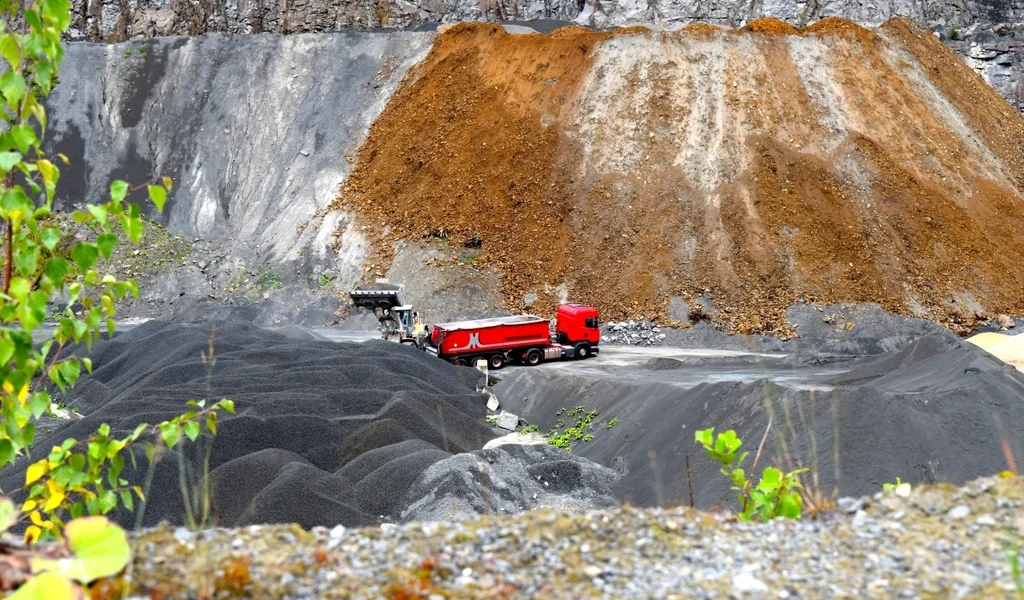
Your quarry supervisor just told you the CAT 950 GC has been pulling to the left in the articulation joint. The operator says it feels “loose.” The machine has 7,200 hours on it. You check the obvious wear items — bucket teeth, lift chains, hydraulic seals — and everything looks serviceable. What you haven’t checked, and what is almost certainly the source of the problem, is the articulation bushing: a large rubber-metal assembly buried at the center frame joint that most technicians replace only after the machine has already started to exhibit steering slop and uneven tire wear.
If you maintain wheel loaders for a living, this guide is built for you. It explains exactly how wheel loader rubber mounts differ from excavator rubber parts, which components wear fastest, what compound specifications matter by climate and application, and how to source the right replacements before a breakdown forces a production stop.
Browse Babacan Group’s rubber mount product range here.
Why Wheel Loaders Destroy Rubber Mounts Faster Than Excavators
The assumption that rubber wear rates are roughly equal across heavy equipment categories is wrong. A hydraulic excavator working a dig-and-swing cycle spends the majority of its operating hours stationary or rotating on its undercarriage. The vibration profile is cyclical and moderate. A wheel loader doing load-and-carry in a quarry or aggregate yard is a fundamentally different machine under fundamentally different stress.
Wheel loaders travel continuously on hard, uneven surfaces. The front axle is rigid — it transmits every surface irregularity directly into the frame. Load-and-carry cycles at 15–25 km/h over broken rock mean the machine’s entire structure absorbs thousands of micro-impacts per hour. The rubber components between every major subassembly — engine, cab, axles, transmission — are absorbing that energy continuously.
In excavator work, a well-specified engine mount might last 8,000–12,000 hours. In a quarry wheel loader doing intensive load-and-carry, the same mount design may reach end-of-life at 4,000–6,000 hours. The continuous travel vibration cycle simply accumulates fatigue faster.
Understanding this difference is the first step toward a maintenance strategy that prevents unplanned downtime rather than reacting to it.
Engine Mounts: 4 to 6 Point Systems and the Articulated Frame Variable
Every wheel loader uses a rubber-isolated engine mounting system. The typical configuration is 4 to 6 mount points arranged to control three axes of engine movement: fore-aft (surge), lateral (sway), and vertical (bounce). Most current-generation machines use bonded rubber-metal mounts with a steel inner core, a vulcanized natural rubber body, and a steel outer bracket.
The CAT 950 GC and 950 LC use a 4-point system with mounts specified to different static load ratings at front and rear — the rear mounts carry more vertical load due to engine weight distribution. The CAT 962 moves to a 6-point system with additional anti-torque mounts that resist engine rotation under high-load conditions.
The Volvo L120H and L150H use a 6-point system with front mounts that are softer in the vertical axis (lower Shore hardness compound) and stiffer in the lateral axis. This tuning acknowledges that lateral loads from the articulated steering geometry put asymmetric stress on the engine bay.
The Komatsu WA380, WA470, and WA500 use a 4-point system across the range, but the WA500 mounts are significantly larger in cross-section than the WA380 units. Using WA380 mount dimensions on a WA500 is an error that will result in accelerated wear and possible mount failure within 2,000 hours.
The critical point about articulated frame design: the front frame and rear frame of a wheel loader are connected by the articulation joint and pivot about a vertical axis. This means the engine (in the rear frame) and the front axle (in the front frame) are never in fixed geometric relation to each other. Engine bay vibration behavior under heavy steering cycles is therefore more complex than in a rigid-frame machine. Mount tuning must account for the torsional loads introduced when the machine articulates at full lock under load.
Articulation Point Bushings: The Most Overlooked Wear Item on Any Wheel Loader
Marcus Henriksen manages a fleet of 14 wheel loaders at a granite quarry in central Sweden. His preventive maintenance program was built around OEM service manuals, which specified 2,000-hour inspection intervals for articulation bushings. At 6,000 hours on a Volvo L150H, his crew noticed the front frame developing 3–4 mm of play at the articulation joint. The bushing had failed well before the next scheduled inspection. The repair cost — including frame alignment correction — came to approximately €4,200. After switching to a more frequent 1,500-hour inspection cycle and higher-load-rated aftermarket bushings, he has not experienced another mid-cycle failure in four years of operation.
The articulation bushing is a large rubber-metal assembly pressed into the pivot housing at the center of the machine. In load-and-carry cycle work, this bushing cycles through its full range of motion — approximately 35–40 degrees of articulation — as the operator steers between loading face and dump point. At typical cycle times of 45–60 seconds, a wheel loader in production completes 60–80 articulation cycles per hour. Over a single 10-hour shift, that is 600–800 full articulation cycles. At 5,000 hours of operation, the articulation bushing has completed approximately 3 million to 4 million load cycles.
No rubber-metal bushing is designed for indefinite service under those conditions. The question is not whether it will wear — it is when.
CAT uses a split-sleeve articulation bushing design on the 950 and 962 series that allows field replacement without removing the pin. Volvo uses a pressed-in bushing that requires hydraulic press equipment for removal. Komatsu WA series machines use a multi-layer bonded bushing with a low-friction liner that extends service life in dry-pivot applications. Each design requires the correct replacement specification — cross-fitting bushings from different brands is not acceptable.
For current specifications and availability, contact Babacan Group’s technical team directly.
Cab Mounts: ROPS Isolation and Why Operator Comfort Has Engineering Consequences
Modern wheel loader cabs are heavy structures. The ROPS (Roll-Over Protective Structure) is integral to the cab frame, and OPS (Operator Protection Structure) guarding adds further mass on machines working in blasting areas. A fully equipped cab on a large wheel loader can weigh 1,200–1,800 kg. Isolating that mass from frame vibration requires a carefully tuned multi-point mounting system.
Current-generation large wheel loaders typically use 6 to 8 cab mount points. The mounts must be soft enough to isolate the high-frequency vibration that comes from continuous hard-surface travel — frequencies in the 10–80 Hz range — while remaining stiff enough to prevent excessive cab movement that would make the machine difficult to control.
Whole-body vibration exposure in wheel loader operators is regulated under the EU Physical Agents (Vibration) Directive (2002/44/EC). Daily vibration exposure limits are 0.5 m/s² (action value) and 1.15 m/s² (limit value). A worn cab mount system that allows metal-to-metal contact or significantly reduced isolation performance can push operator vibration exposure above regulatory limits — creating both a health risk and a legal liability for the operating company.
Cab mounts on the JCB 457 and 467 use a rubber-bonded design with a rate of approximately 200–350 N/mm in the vertical axis. The Liebherr L 556, L 566, and L 586 use a stiffer primary mount at the front two points (to control cab pitch under aggressive loading cycles) with softer rear mounts for vertical isolation.
The XCMG LW500 cab mount system uses a 6-point arrangement with hydraulic damper elements in parallel with the rubber mounts on higher-specification variants. On standard variants, the rubber mounts alone must handle the full isolation requirement. For operators in dust-heavy environments, cab mounts should be inspected at 1,000-hour intervals — contaminant ingress accelerates rubber degradation significantly.
Cold Climate Compound Selection: What -40°C Does to Standard Rubber
Sami Virtanen operates three Komatsu WA470s at a sand and gravel operation in northern Finland. During the first winter of operation, he noticed the cab on one machine was transmitting significantly more vibration than the other two identically specced units. After inspection, he found that two of the four rear cab mounts had hardened to the point where they were behaving essentially as rigid spacers rather than vibration isolators. The ambient temperature that week had been -38°C. The standard natural rubber compound in the mounts had not been rated for those conditions.
Standard natural rubber compounds begin to stiffen significantly below -20°C and lose most of their elastic performance below -30°C. For wheel loaders operating in Scandinavia, Canada, Russia, and other cold-climate regions, cab mounts must be specified in low-temperature-rated compounds — typically low-temperature silicone rubber or specially formulated synthetic rubber blends that maintain flexibility to -40°C or below.
Engine mounts are slightly less critical from a cold-temperature perspective because the engine bay warms quickly after startup. But cab mounts on machines that sit overnight at -35°C are cold at the time the operator first climbs in and immediately begins work. The first 15–30 minutes of operation — when isolation performance is most needed because the operator is managing cold hydraulics and stiff controls — is exactly when standard-compound cab mounts are at their worst.
Babacan Group manufactures cab mounts in cold-climate compound specifications on request, with compound selection matched to the customer’s operating temperature range. For operations below -30°C, always specify low-temperature compound at the time of order.
Rear Axle Oscillation Pivot Bushings: A Load Path Most Technicians Miss
Wheel loaders use a rigid front axle and an oscillating rear axle. The rear axle pivot allows the rear axle to rock approximately ±8–12 degrees to keep all four tires in contact with uneven ground. The pivot housing contains a rubber-bonded bushing that allows this oscillation while maintaining the axle’s longitudinal and lateral position relative to the frame.
This bushing is under continuous load whenever the machine is traveling over uneven ground — which is nearly always the case in quarry and aggregate applications. The oscillation pivot bushing on a wheel loader is analogous to the rear axle trunnion bushing on a rigid dump truck, but because the wheel loader is lighter and more maneuverable, the pivot sees more frequent full-range cycles.
On the Volvo L120H and L150H, the rear axle pivot uses a large cylindrical rubber-metal bushing with a length-to-diameter ratio that provides both oscillation compliance and lateral stiffness. On CAT 950 series machines, the pivot design uses a spherical rubber-metal joint that provides compliance in multiple axes simultaneously. These designs are not interchangeable.
Signs of rear axle pivot bushing wear: visible cracking or chunking in the rubber element, axle movement beyond the normal oscillation range (the rear axle should not be able to rock more than its design limit), and abnormal rear tire wear patterns — particularly uneven wear across the tread width on one or both rear tires.
For technical guidance on application-specific bushing specifications, see the excavator engine mounts guide for comparison context on rubber mount compound selection principles, and the construction machinery suspension parts guide for broader context on suspension rubber in heavy equipment.
Hydraulic Pump Couplings: Why Two Pumps Means Two Wear Points
Most large wheel loaders use tandem pump arrangements — a separate steering pump and a separate work-hydraulics pump — driven from the engine power take-off. Each pump connection to the engine drive requires a flexible coupling element. Where an excavator typically has one hydraulic pump coupling to maintain, a large wheel loader has two.
The flexible coupling element between the engine and the hydraulic pump absorbs torsional shock from pump pressure spikes. When the operator drops a full bucket load from height, the sudden pressure transient in the work-hydraulics circuit produces a torsional spike at the pump drive. The coupling element absorbs this spike and prevents it from being transmitted to the crankshaft as a torsional impact.
Coupling elements on wheel loader pumps are typically star-shaped or jaw-type rubber spiders. The rubber compound is usually shore 92–98A natural rubber or polyurethane depending on the original equipment specification. The Komatsu WA series and the XCMG LW500 both use jaw-type couplings with replaceable rubber elements — the element can be replaced without removing the pump, which significantly simplifies service.
For detailed coupling selection guidance, the OEM vs. aftermarket rubber parts guide covers the compound and dimensional tolerances that determine whether an aftermarket coupling element will meet OEM performance specifications.
Transmission-to-Engine Coupling: The Torque Converter Interface
Wheel loaders use torque converter transmissions — a fundamentally different drivetrain architecture from the simple gear drives found in most excavators. The flex plate or coupling between the engine flywheel and the torque converter input is a rubber-metal assembly that must accommodate both torsional flexibility and the radial and axial misalignment tolerance between the engine and torque converter centerlines.
This coupling operates at full engine RPM for the entire working life of the machine — it never gets a rest cycle the way a pump coupling does between hydraulic demands. Typical service life is 6,000–10,000 hours depending on compound quality and alignment accuracy at installation. Misalignment at installation — even 0.2–0.3 mm of radial offset — can halve service life by creating a rotating bending load in the coupling element.
When replacing the engine-to-torque converter coupling, alignment verification with a dial indicator is not optional. It is the single most important factor in achieving full service life from the new component.
Request a quote for wheel loader rubber mounts and coupling elements from Babacan Group.
Application-Specific Sourcing: Matching the Part to the Operation
Not all wheel loader applications are equal. A machine working in municipal waste handling — smooth surfaces, low travel speeds, light loading — will wear mounts in a completely different pattern than a machine in a limestone quarry doing load-and-carry at maximum rated capacity.
For quarry and aggregate applications: prioritize articulation bushing inspection frequency, specify high-load-rated compounds for front and rear cab mounts, and plan for rear axle pivot bushing replacement at 5,000–6,000 hours regardless of visual inspection findings.
For municipal and construction applications: cab mount isolation quality is the priority — operators in these environments work longer shifts and vibration exposure monitoring is more likely to be audited. Specify low-hardness cab mounts for maximum isolation and inspect for surface cracking at every oil service interval.
For cold-climate operations: specify low-temperature compounds for all externally exposed mounts before the first winter season. Do not wait for a failure in the field to discover that standard compounds were installed.
Babacan Group has manufactured rubber parts for construction machinery since 1986, holds ISO 9001:2015 quality management certification, and supplies to customers in 84+ countries. The 90,000+ reference catalog covers CAT, Volvo, Komatsu, Liebherr, JCB, XCMG, and all other major wheel loader brands.
For vibration isolation performance data on specific mount applications, the Babacan Group technical team can provide compound selection recommendations based on operating conditions.
Key Takeaways
- Wheel loaders wear rubber mounts significantly faster than excavators due to continuous hard-surface travel — plan replacement intervals at 60–70% of excavator equivalent hours in quarry applications.
- Articulation point bushings are the most commonly overlooked wear item; in load-and-carry applications they complete 3–4 million cycles by 5,000 hours and should be inspected at 1,500-hour intervals.
- Rear axle oscillation pivot bushings carry continuous load during travel and show wear as abnormal tire wear patterns before they show visible rubber degradation.
- Cold-climate operations below -30°C require low-temperature-rated rubber compounds for cab mounts — standard natural rubber loses most of its elastic performance at these temperatures.
- Tandem pump arrangements mean two coupling elements per machine versus one on most excavators — both must be maintained on the same interval.
Word Count: ~2,310 words